
The Role of Presentation Products in Recognition

TL;DR:
- Presentation products are physical materials used to deliver, display, and preserve achievement recognition artifacts. High-quality presentation materials influence perceptions of value, legitimacy, and long-term memory of the recognition. Investing in premium, personalized presentation products boosts recognition impact and organizational reputation.
Presentation products are defined as the physical materials used to deliver, display, and preserve recognition artifacts, including diploma covers, certificate holders, document folders, and award cases. The role of presentation products in recognition extends far beyond aesthetics. These materials transform a moment of acknowledgment into a lasting symbol of achievement that recipients carry, display, and remember. Organizations that invest in quality presentation materials signal respect for the recipient’s effort and reinforce the cultural value of excellence. Wehonoru specializes in exactly this category, producing custom diploma covers and certificate holders that serve schools, corporations, healthcare organizations, and government agencies across the United States.
How do presentation products influence perception and memory of recognition?
Physical presentation products shape how recipients and observers perceive the significance of an award before a single word is read. Judgments about professionalism form within 5 seconds of seeing a presentation artifact. That window is shorter than most organizations realize, and it means the cover of a diploma or certificate folder carries enormous weight in the recognition experience.
The mechanism behind this effect is well documented. Premium materials cause recipients to infer higher award value before they inspect the content inside. A metallic foil cover signals prestige and care. A thin, generic folder signals the opposite. Recipients read the quality of the container as a proxy for the quality of the recognition itself.
“The physical artifact of recognition is not decoration. It is the first and most durable signal of how much the issuing organization values the achievement it is honoring.”
Physical awards remain the most remembered and valued form of recognition compared to digital alternatives, and they reduce job-hunting behavior among employees. That finding carries a direct business implication: organizations that invest in tangible, well-presented recognition materials retain talent more effectively than those that rely on email announcements or digital badges.
Several material and design factors drive this effect:
- Cover material weight and texture. Heavier stock with a smooth or linen finish communicates durability and permanence.
- Metallic foil printing. Gold, silver, and copper foil on cover text or logos activates the premium materials heuristic immediately.
- Precise construction. Clean folds, aligned edges, and secure closures signal craftsmanship and attention to detail.
- Color consistency. Institutional colors printed accurately reinforce brand identity and organizational pride.
- Custom sizing. A cover that fits the document perfectly, rather than a generic sleeve that leaves gaps, signals that the recognition was prepared specifically for this recipient.
Poor presentation quality signals scattered thinking and unprofessionalism, actively eroding trust in the issuing organization. The inverse is equally true: a well-crafted certificate holder raises the perceived legitimacy of the entire recognition program. For HR departments, academic institutions, and government agencies, that legitimacy is not a luxury. It is a core function of the recognition system.
Why are recognition and rewards different, and why does presentation matter?

Recognition and rewards are not the same thing, and conflating them produces measurable harm to engagement. Recognition via physical presentation products supports intrinsic motivation better than financial rewards do, particularly when those rewards become expected or transactional. A cash bonus tied to a performance metric is a reward. A custom certificate presented in a premium cover at a ceremony is recognition. The distinction matters because intrinsic motivation, the kind that drives sustained performance, responds to recognition and withers under purely transactional reward structures.
Presentation products serve as emotional and social connectors between the issuing organization and the recipient. The physical object represents the relationship, not just the achievement. A graduation diploma cover handed to a student by a dean carries the weight of years of effort and institutional endorsement. A framed certificate given to an employee by their direct manager carries the weight of personal acknowledgment. Neither of those moments is replicated by a digital notification.
Unexpected tangible awards from direct managers generate stronger reciprocal effort than firm-wide digital recognition programs. The personal, physical nature of the award creates a sense of genuine appreciation that broad digital programs cannot match. This finding reinforces why the quality of the presentation product matters at the individual level, not just the organizational level.
Organizations should be aware of what researchers call the “visual authority trap.” High-quality presentation materials increase perceived legitimacy and importance of the recognition itself. This effect cuts both ways. A premium cover amplifies the value of a meaningful award. A cheap cover diminishes even a significant achievement. The presentation product does not merely frame the recognition. It actively shapes how the recognition is received and remembered.
Pro Tip: Avoid issuing the same generic folder for a 10-year service award and a new-hire welcome packet. Matching the quality tier of the presentation product to the significance of the achievement prevents the visual authority effect from working against you.
What are the best practices for choosing presentation products?
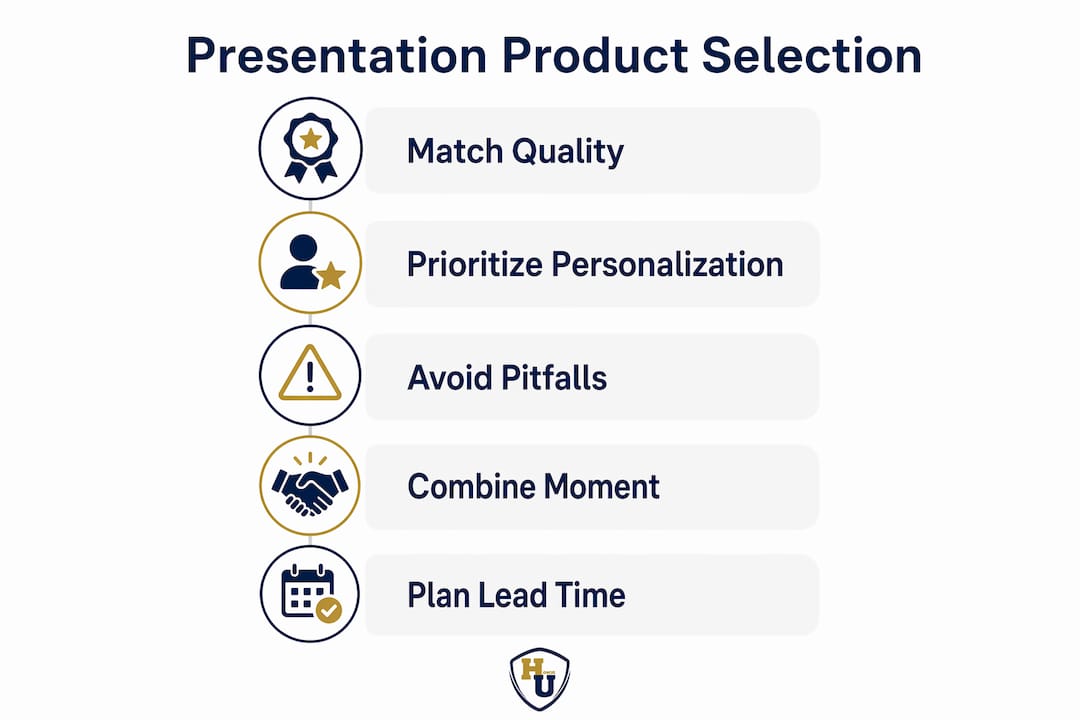
Selecting the right presentation product requires matching material quality to achievement significance. The document cover selection process should begin with a clear hierarchy of recognition levels within the organization or institution.
Establish a recognition tier system
A tiered approach prevents mismatched perceptions and ensures that the most significant achievements receive the most distinguished presentation materials. A practical three-tier framework works as follows:
- Tier 1: Milestone achievements. Graduations, retirements, board certifications, and military commendations. These warrant premium covers with metallic foil printing, custom institutional branding, and made-to-fit sizing. Wehonoru’s tent-style document covers with gold or silver foil are purpose-built for this tier.
- Tier 2: Program completions and professional certifications. Internal training completions, continuing education certificates, and annual performance awards. Standard certificate holders with institutional color and logo are appropriate here.
- Tier 3: Participation and acknowledgment. Volunteer recognition, attendance awards, and introductory program completions. Clean, professionally printed folders without foil are sufficient at this level.
Prioritize personalization
Personalization is the single most powerful design decision in presentation product selection. A recipient’s name, the specific achievement, the date, and the issuing authority’s logo transform a generic folder into a personal artifact. Personalized certificate display practices consistently outperform generic alternatives in recipient satisfaction and long-term retention of the recognition memory.
Avoid common material pitfalls
| Design choice | Effect on perceived value |
|---|---|
| Thin, lightweight cover stock | Signals low investment; reduces perceived award significance |
| Generic pre-printed text that does not match the achievement | Creates disconnect; recipient feels interchangeable |
| Misaligned or off-color institutional branding | Undermines organizational credibility |
| Oversized cover for a standard document | Suggests poor planning and lack of attention |
| Premium foil with custom sizing and accurate branding | Activates the premium materials heuristic; raises perceived legitimacy |
Combine the moment with the material
The presentation product and the presentation moment work together. A premium diploma cover handed to a graduate on stage in front of family and peers creates a memory that lasts decades. The same cover mailed in a plain envelope without ceremony loses much of its impact. Award folder preparation for ceremonies is a discipline in itself, covering logistics, sequencing, and the physical handling of materials during live events.
Pro Tip: Order presentation products with at least 5 business days of lead time for standard needs. For last-minute ceremonies, Wehonoru ships custom covers the next business day, which eliminates the most common logistical failure point in recognition programs.
What is the ROI of investing in quality presentation products?
Organizations that treat presentation products as a cost center rather than a program investment consistently underperform on recognition outcomes. Organizations implementing high-quality presentation design standards report 25–40% improvement in presentation-related business outcomes within the first 12 months. That range spans sectors from corporate HR to academic administration, and it reflects the broad applicability of presentation quality as a performance driver.
The return on investment operates through several channels. Employee retention improves when recognition feels genuine and significant. Client confidence increases when proposal folders and award materials reflect organizational competence. Institutional credibility grows when certificates and diplomas are presented in materials that match the weight of the credential they contain.
“Presentation quality acts as a primary competence filter. Poor materials or design signal unprofessionalism and lower organizational trust before a single conversation takes place.”
Tracking the impact of presentation product upgrades requires clear key performance indicators. Useful metrics include employee retention rates in the 12 months following a recognition program upgrade, recipient survey scores on perceived recognition quality, and repeat order rates from institutional clients, which signal satisfaction with the presentation experience. For academic institutions, tracking whether graduates display their diplomas, a behavior strongly correlated with premium cover quality, provides a direct measure of presentation product effectiveness.
The cost argument for premium presentation products is straightforward. A custom foil-printed diploma cover from Wehonoru costs a fraction of the annual cost of replacing a disengaged employee. The lasting artifact effect of quality folders means the investment continues to generate motivational return long after the ceremony ends. Recipients who display their credentials in premium covers reinforce the recognition daily, both for themselves and for anyone who sees the displayed document.
For organizations managing recognition programs across multiple departments or campuses, bulk pricing and no-minimum ordering remove the traditional barriers to upgrading presentation standards. Wehonoru’s tiered bulk discounts make it financially practical to standardize premium materials across an entire institution without requiring a large upfront commitment.
Key Takeaways
Presentation products are strategic investments in recognition culture, not optional accessories, and their quality directly determines how recipients perceive and remember the achievements they represent.
| Point | Details |
|---|---|
| First impressions form fast | Professionalism judgments form within 5 seconds of seeing a presentation artifact, making material quality critical. |
| Physical beats digital for retention | Tangible awards are remembered longer and reduce job-hunting behavior more effectively than digital recognition. |
| Match quality to achievement tier | Mismatched presentation materials undermine even significant achievements; use a tiered selection system. |
| Personalization multiplies impact | Names, dates, logos, and specific achievement text transform generic folders into lasting personal artifacts. |
| ROI is measurable | Organizations upgrading presentation standards report 25–40% improvement in related business outcomes within 12 months. |
What organizations consistently get wrong about presentation products
Most organizations treat presentation products as a procurement decision rather than a culture decision. They buy whatever is cheapest, order in bulk to hit a minimum, and use the same folder for every recognition occasion regardless of significance. The result is a recognition program that feels bureaucratic rather than personal, and recipients notice.
The most overlooked opportunity in recognition program design is the gap between the ceremony and the artifact. Organizations invest heavily in event logistics, speeches, and photography, then hand recipients a thin, generic folder that does not survive the drive home. That folder is the only physical evidence of the recognition that the recipient keeps. When it fails to reflect the significance of the achievement, the entire program loses credibility over time.
I have seen institutions spend thousands of dollars on recognition events and then undermine the entire investment with a $2 folder. The math does not work. A premium cover that costs $15–$25 per recipient extends the recognition beyond the ceremony into the recipient’s home, office, or display case. That extension is where the real motivational return lives.
The future of presentation products in recognition will include greater personalization at scale, driven by digital printing technology and made-to-fit sizing capabilities. Organizations that build personalization into their standard recognition workflow now will have a structural advantage in talent retention and institutional culture as these capabilities become the expected norm. Wehonoru’s current model, with no minimum orders and next-day production, already makes that level of personalization accessible to organizations of any size.
— Manager
Wehonoru’s presentation products for recognition programs
Recognition moments deserve materials that match their significance. Wehonoru produces custom diploma covers, certificate holders, and tent-style document covers with metallic foil printing, shipped the next business day with no minimum order requirement.
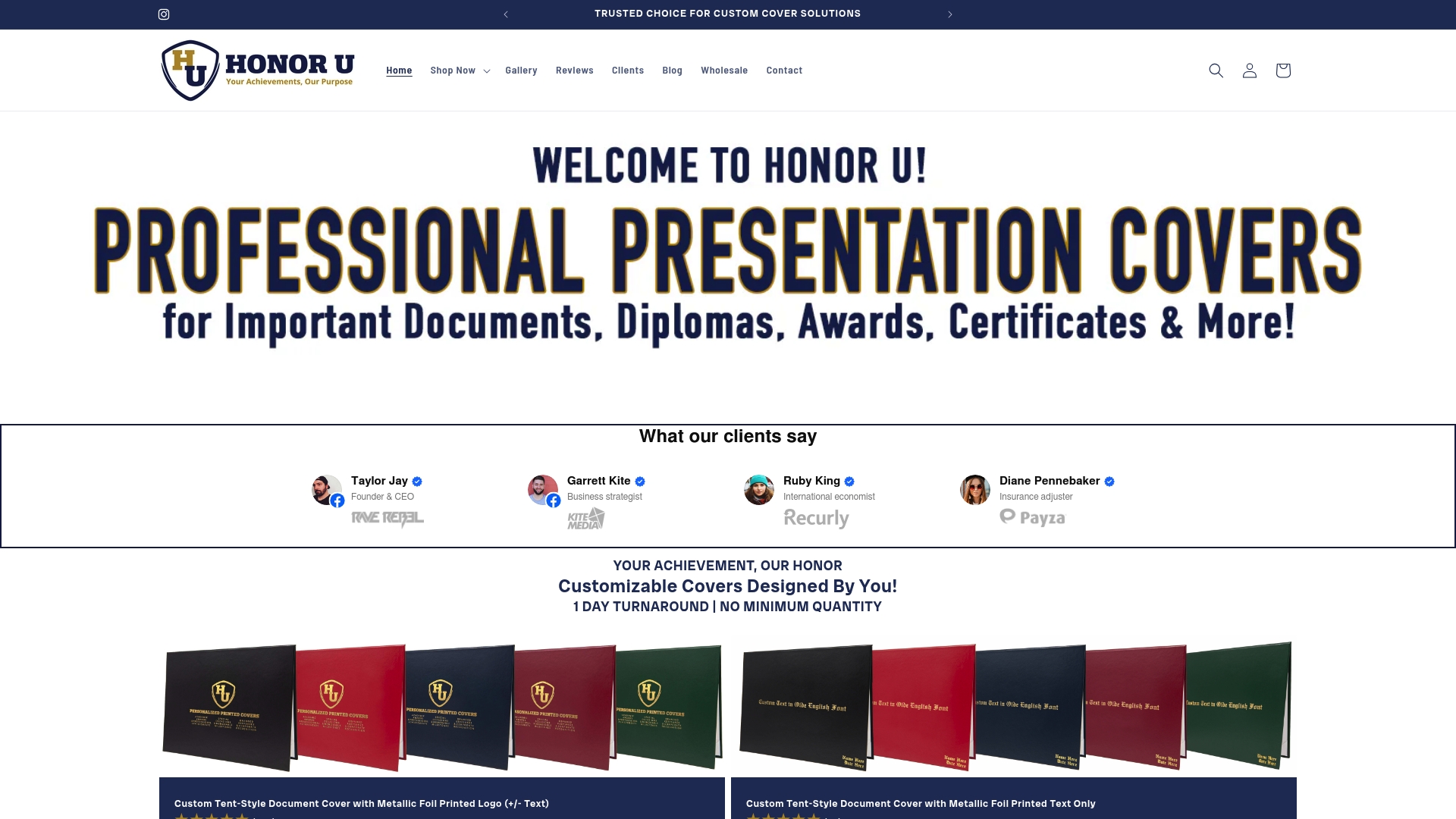
Whether you are preparing for a graduation ceremony, an employee recognition event, or a professional certification presentation, Wehonoru offers premium graduation covers and custom class-year document covers that reflect the quality of the achievement inside. Orders over $30 ship free, and bulk pricing applies automatically at checkout. Every cover is available in custom dimensions to fit non-standard documents, with institutional logo and foil color options that match your organization’s branding.
FAQ
What are presentation products in recognition programs?
Presentation products are the physical materials used to deliver and preserve recognition artifacts, including diploma covers, certificate holders, and award folders. They serve as the tangible representation of an achievement and directly shape how recipients perceive the value of the recognition.
Why do physical awards outperform digital recognition?
Physical awards are remembered longer and valued more than digital alternatives, and they reduce job-hunting behavior among recipients. The tangible nature of a well-presented award creates a lasting artifact that reinforces the recognition daily.
How does material quality affect perceived award value?
Recipients infer award value from the quality of the presentation materials before reading the content inside. Premium materials, such as metallic foil covers and weighted stock, activate a heuristic that raises the perceived legitimacy and significance of the recognition.
How should organizations choose the right presentation product?
Organizations should match the quality tier of the presentation product to the significance of the achievement. Milestone awards warrant premium foil covers with custom branding, while participation certificates require only clean, professionally printed folders.
What ROI can organizations expect from upgrading presentation standards?
Organizations that implement high-quality presentation design standards report 25–40% improvement in presentation-related business outcomes within the first 12 months, spanning employee retention, client confidence, and institutional credibility.