
Document Cover Selection Guide for Diplomas and Awards

TL;DR:
- A document cover protects and enhances formal credentials like diplomas and awards. Customization and material choice affect presentation quality and durability, with options ranging from leatherette to plastic. Matching cover size and binding compatibility ensures the finished product looks professional and lasts over time.
A document cover is a specialized protective and presentation folder designed to enhance the appearance and longevity of diplomas, certificates, or awards. This document cover selection guide covers every decision point you face: material type, customization technique, sizing compatibility, and budget tier. Whether you represent a university graduating hundreds of students or a small nonprofit honoring a single volunteer, the right cover transforms a printed credential into something recipients keep for life. Materials range from leatherette and linen to high-clarity plastics, and customization options include foil stamping, silk screening, and embossing. Choosing well requires understanding how each factor affects both presentation quality and practical durability.
1. What are the main document cover types and materials?
Professional document covers fall into two broad categories: formal presentation folders built for tactile prestige, and functional report covers built for durability and visibility. Knowing which category fits your use case is the first decision in any document cover selection guide.
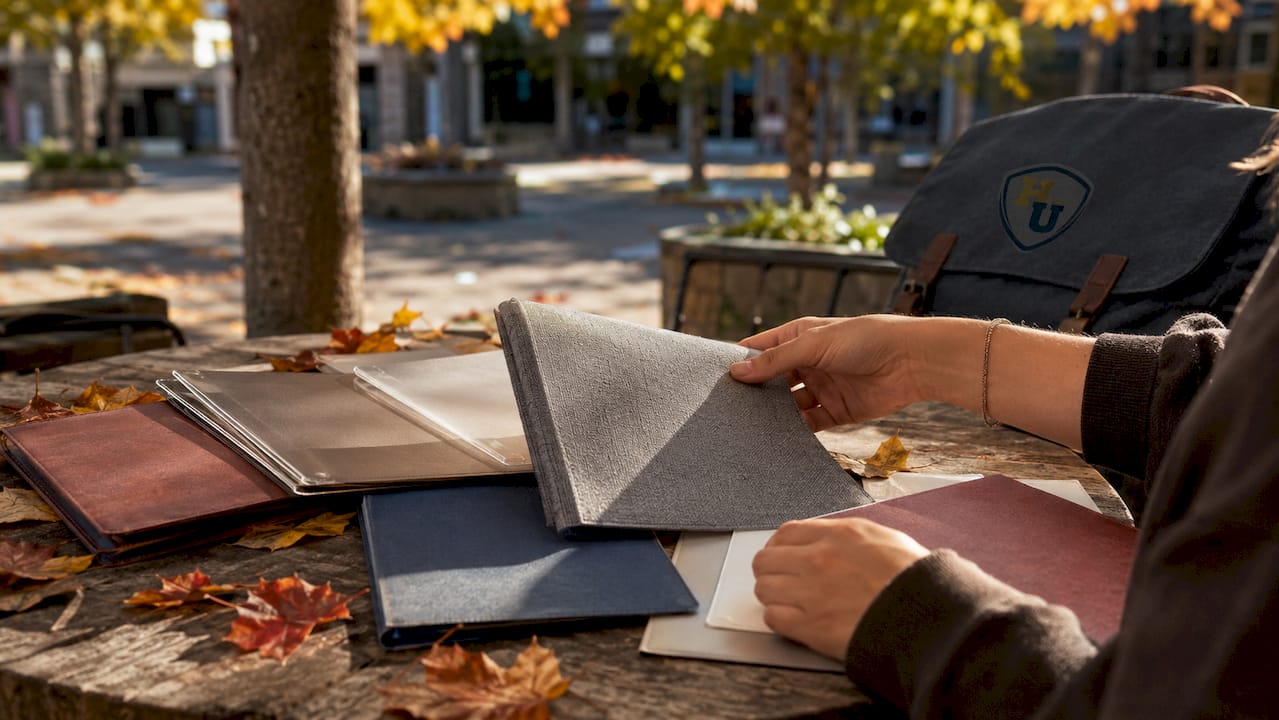
Clear plastic covers are the right choice when the document’s title or design must show through the front panel. PVC and polypropylene are the two dominant materials in this category. Both are waterproof and tear-resistant, making them well suited for frequently handled documents like student reports or training certificates.
Frost Poly covers offer a translucent, matte appearance that softens the look of the cover while still allowing some content visibility. They combine professional opacity with strong durability. Frost Poly is also treated for custom printing, which makes it a practical mid-tier option for institutions that want branding without the cost of premium leatherette.
Regency-style covers use a heavier stock with a structured feel, landing between cardstock and soft plastic in rigidity. They hold their shape well on a shelf or in a frame, which matters for diplomas displayed in offices or classrooms.
Leatherette and linen covers are the standard for formal award presentations. Leatherette mimics the texture of genuine leather and carries an heirloom feel that recipients associate with prestige. Linen weave covers offer a subtler texture that photographs well and pairs naturally with gold or silver foil stamping.
Metallic covers deliver a glamorous finish and are available in over a dozen colors. Heavyweight metallic stock provides a high-quality feel suited to formal awards, retirement presentations, and championship recognitions. Embossing and debossing work particularly well on metallic surfaces because the contrast between raised and flat areas catches light.
Cardstock covers are the budget option. They are cost-effective and easy to print on, but they are less durable and suited only for short-term or internal use. A training handout or a temporary certificate of completion fits cardstock well. A graduation diploma does not.
| Material | Best Use | Durability | Custom Print |
|---|---|---|---|
| Clear PVC/Polypropylene | Report covers, training docs | High | Limited |
| Frost Poly | Mid-tier certificates | High | Yes (foil, silk screen) |
| Leatherette | Diplomas, formal awards | Very High | Yes (foil, emboss) |
| Linen | Academic and corporate certs | High | Yes (foil stamp) |
| Metallic | Premium awards, recognition | High | Yes (foil, deboss) |
| Cardstock | Internal, short-term use | Low | Yes (digital print) |
Pro Tip: Match your material to the expected lifespan of the document. A ServSafe food safety certificate renewed annually fits cardstock. A medical school diploma displayed for decades deserves leatherette or metallic stock.
2. How to select document covers that reinforce brand identity
Customization is not merely aesthetic. Custom-foiled covers significantly raise the perceived value of the credential and the professionalism of the issuing organization. That psychological effect is the core reason institutions invest in branded covers rather than blank ones.
The three primary customization techniques are foil stamping, silk screening, and embossing. Each produces a different visual and tactile result.
- Foil stamping applies metallic or colored foil to the cover surface using heat and pressure. Gold and silver are the most common choices for diplomas and certificates. The result is sharp, reflective, and durable.
- Silk screening uses ink pressed through a mesh stencil. It works well on Frost Poly and polypropylene covers. Colors are vivid and the process supports multi-color logo reproduction.
- Embossing and debossing create raised or recessed impressions without ink. Embossing works best on leatherette and metallic covers where the texture contrast is most visible.
Color and texture alignment with your institution’s brand guidelines matters more than most buyers realize. A university with a navy and gold identity should carry those colors through to the cover stock, foil color, and even the interior lining. Consistency across every touchpoint reinforces the credential’s authority.
Finish choice between matte and gloss depends on the presentation setting. Matte finishes reduce glare under stage lighting and photograph cleanly at formal ceremonies. Gloss finishes look striking in product photography and retail packaging but can create unwanted reflections during live events.
Pro Tip: If your ceremony is photographed or livestreamed, request matte-finish covers. Gloss covers reflect stage lights directly into camera lenses, washing out the moment in photos.
Institutions that have executed this well include universities that print their seal in gold foil on a navy leatherette cover, matching the school’s official color palette exactly. The result is a cover that graduates recognize as belonging to their institution before they even open it. That instant recognition is the goal of any well-executed document cover customization process.
3. What sizing and binding compatibility factors must you consider?
Sizing is the most technically specific part of choosing document covers, and it is the area where buyers most often make costly mistakes. The wrong size wastes materials and produces a finished product that looks unprofessional.
Standard document cover sizes include letter (8.5 x 11 inches), legal (8.5 x 14 inches), half, oversize, index, and ledger. Not every material or style is available in every size. Confirm size availability before committing to a material.
For diplomas and certificates with non-standard dimensions, made-to-fit custom sizing is the correct solution. Wehonoru produces covers to custom dimensions, which is a capability most standard suppliers do not offer. A military commendation, an oversized architectural certificate, or a European-format academic degree all require this flexibility.
Binding compatibility is a critical factor that buyers frequently overlook. The numbered list below covers the main binding methods and their cover requirements.
- Comb binding requires pre-punched covers with rectangular slots. Covers must be punched before binding, and the punch pattern must match the comb pitch.
- Wire-O binding uses round holes punched in a specific pattern. Cover thickness affects punch accuracy. Covers thicker than 12 mil can cause punch machine errors and surface damage.
- Thermal binding uses heat-activated adhesive strips and requires no punching. Any cover thickness works, making thermal binding the most forgiving option.
- Spiral binding uses a continuous coil threaded through round holes. Pre-punched covers save time and reduce alignment errors.
- Saddle-stitch and staple binding work only with lighter cardstock covers and are not appropriate for formal diploma presentations.
| Binding Method | Punch Required | Max Cover Thickness | Best For |
|---|---|---|---|
| Comb | Yes (rectangular) | 10 mil | Reports, training manuals |
| Wire-O | Yes (round) | 12 mil | Formal presentations |
| Thermal | No | Any | Diplomas, certificates |
| Spiral | Yes (round) | 10 mil | Portfolios, catalogs |
Pre-punched covers offer convenience and consistent hole placement. Unpunched covers offer greater versatility because you can match any punch pattern your binding machine uses. For institutions running high-volume binding operations, pre-punched covers reduce production time significantly.
Thickness matters more than most buyers expect. The 8 mil to 12 mil range covers most professional applications. Covers thicker than 12 mil are harder to punch accurately, which leads to misaligned holes and a finished product that does not lie flat.
4. What are the best document cover options by use case and budget?
The best document cover options depend on three factors: how formal the occasion is, how often the document will be handled, and what budget the institution or individual is working within. A clear framework for choosing document covers by use case saves time and prevents expensive mismatches.
Premium tier: leatherette and metallic covers with foil stamping
Leatherette and metallic covers are the right choice for graduation diplomas, medical licenses, bar admissions, and retirement recognition. They carry the weight and texture that recipients associate with a significant life achievement. Foil stamping adds institutional identity and makes the cover feel like a keepsake rather than a folder.
- Best for: university diplomas, professional licenses, military commendations, retirement presentations
- Customization: foil stamping, embossing, debossing
- Durability: very high, suitable for decades of display
Mid-tier: Frost Poly and Regency covers with silk screening
Frost Poly and Regency covers hit the right balance of durability, print quality, and cost for institutions issuing large volumes of certificates. They accept silk screening and foil stamping well. A corporate HR department issuing quarterly employee recognition awards or a trade school certifying dozens of graduates per semester fits this tier precisely.
- Best for: corporate certificates, trade school completions, continuing education credentials
- Customization: silk screening, foil stamping
- Durability: high, appropriate for framing or filing
Budget tier: cardstock and clear plastic covers
Cardstock and clear PVC covers serve internal documents, training handouts, and temporary credentials well. They are not appropriate for formal award presentations. A food safety certification renewed annually or an internal compliance training record fits this tier.
- Best for: internal reports, short-term certificates, training documentation
- Customization: digital printing
- Durability: low to moderate
Environmental considerations
Eco-friendly Frost Poly covers are tear-proof, treated for custom printing, and made with recycled content. Institutions with sustainability commitments can specify recycled-content covers without sacrificing print quality or durability. This option aligns with environmental goals while maintaining a professional presentation standard.
Pro Tip: For institutions ordering covers across multiple programs or departments, standardize on one material tier and one foil color. Consistency across your organization’s credentials builds a recognizable identity that recipients and employers both notice.
Key takeaways
The most effective document cover selection combines material quality, customization technique, and binding compatibility to produce a credential that recipients value and institutions are proud to present.
| Point | Details |
|---|---|
| Match material to occasion | Leatherette and metallic covers suit formal diplomas; cardstock fits short-term internal documents. |
| Customization builds perceived value | Foil stamping and silk screening raise recipient perception of the credential’s prestige and the issuing organization’s professionalism. |
| Respect binding thickness limits | Covers thicker than 12 mil cause punch errors; stay within the 8–12 mil range for most binding methods. |
| Confirm size before ordering | Not every material is available in every size; verify availability for non-standard document dimensions. |
| Standardize for institutional consistency | Using one material and foil color across all credentials creates a unified, recognizable brand identity. |
What I have learned from watching institutions get this wrong
The most common mistake I see is institutions choosing covers based on price alone, then discovering the cover is incompatible with their binding equipment. A leatherette cover that is too thick for the punch machine produces misaligned holes and a finished diploma that does not close properly. That outcome is worse than a plain cover because it signals carelessness at the moment that should signal achievement.
The second mistake is treating customization as optional. A blank cover communicates nothing about the issuing institution. A foil-stamped cover with the school seal and graduation year communicates tradition, pride, and permanence. Recipients keep the latter. They discard the former.
Bulk ordering is where institutions consistently leave value on the table. Ordering covers in volume locks in consistent materials and foil colors across an entire graduating class or award cycle. Inconsistency across a single ceremony, where some covers are navy leatherette and others are black cardstock, undermines the credibility of every credential in the room.
My practical advice: start with the occasion, not the budget. Identify the material tier the moment deserves, then find the most cost-effective supplier who can meet that standard with custom sizing and a fast turnaround. For diplomas and formal awards, that combination of quality and speed is the standard worth holding.
— Manager
Wehonoru’s tent-style covers for graduation presentations
Wehonoru’s tent-style diploma covers are built for the moments that matter most. Each cover is available with metallic foil printing in multiple colors, allowing schools and organizations to match their institutional branding precisely.
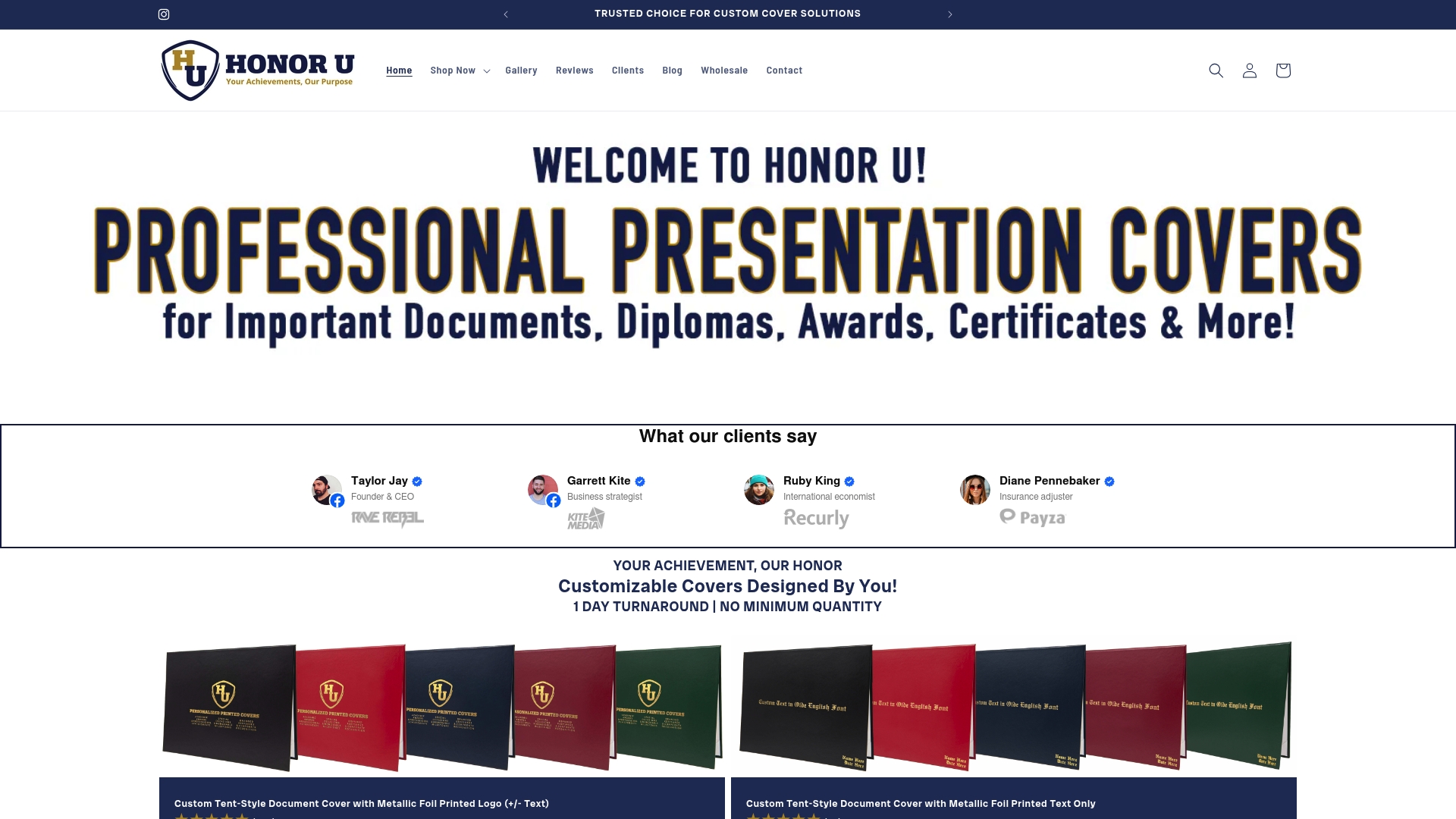
The Classic Diploma of Graduation Tent-Style Document Cover combines a traditional folded design with premium materials and next-day production. Wehonoru ships custom orders in one business day with no minimum order quantity, which means a single graduate or an entire class receives the same quality and speed. Free shipping applies to orders over $30. For institutions planning graduation ceremonies, corporate award events, or recognition programs, Wehonoru’s full product range is available at wehonoru.com. You can also explore tailored diploma cover solutions for 2026 ceremonies directly on the site.
FAQ
What is the best material for a diploma cover?
Leatherette and metallic covers are the best materials for diploma covers. They provide an heirloom feel, accept foil stamping, and hold their appearance for decades of display.
How do I choose the right size for a document cover?
Match the cover size to your document dimensions exactly. Standard sizes include letter, legal, and ledger; for non-standard diplomas or certificates, use a supplier that offers made-to-fit custom dimensions.
What customization options are available for certificate holders?
Foil stamping, silk screening, and embossing are the three primary customization methods. Foil stamping is the most common choice for diplomas because it produces a sharp, metallic finish that reinforces institutional prestige.
Does cover thickness affect binding compatibility?
Yes. Covers thicker than 12 mil cause punch machine errors and misaligned holes. The practical range for most binding methods is 8 to 12 mil, with thermal binding being the only method that accepts any thickness.
What is a tent-style document cover?
A tent-style document cover is a folded presentation folder that stands upright on a flat surface, displaying the credential inside like a book propped open. It is the standard format for graduation diploma presentations and formal award ceremonies.