
Educational Achievement Cover Ideas for Memorable Recognition

TL;DR:
- Creative achievement covers turn diplomas into lasting symbols of success that inspire recipients long-term. Properly designed covers, such as tent-style displays and personalized foil-printed folders, enhance recognition and elevate the ceremonial experience. Strategic presentation, including facing the cover outward and timing the handoff carefully, further amplifies their impact.
Educational achievement cover ideas are creative, purposeful presentations of diplomas and certificates that transform a printed document into a lasting symbol of accomplishment. A well-structured recognition program increases academic performance, with 93.8% of participants agreeing it boosts results and 96.3% confirming that teacher appreciation builds student confidence. The standard industry term for these products is “diploma and certificate presentation covers,” though the broader concept of achievement cover design spans everything from tent-style document covers to custom foil-printed folders. Whether you are a school administrator planning a graduation ceremony, an HR director running an employee recognition program, or a parent honoring a homeschool graduate, the cover you choose signals how much the achievement matters.
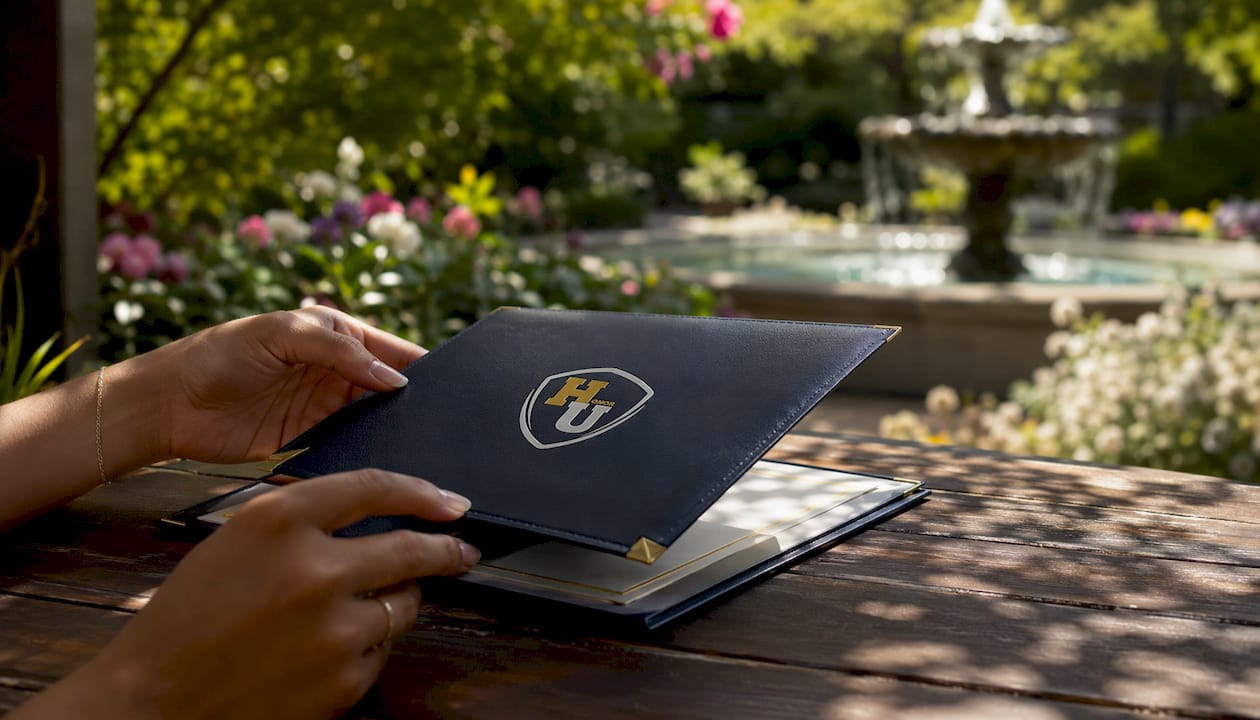
1. What are the top creative educational achievement cover ideas?
The strongest educational achievement cover ideas share one quality: they make the recipient feel that the recognition was designed specifically for them. Generic covers undercut that feeling. The ideas below range from classic to contemporary, and each one serves a distinct purpose in the recognition experience.
Tent-style document covers for display and photography
Tent-style covers stand upright on a table or desk without a frame or stand. That self-supporting design makes them ideal for ceremony tables, office desks, and photo opportunities. Wehonoru produces tent-style covers with metallic foil printing in five color options, and the covers are available in made-to-fit custom dimensions for non-standard documents. The result is a cover that looks polished from every angle, including the camera angle.
Personalized foil-printed diploma covers
Metallic foil printing adds a tactile, heirloom quality that standard inkjet printing cannot replicate. Gold, silver, and other foil colors catch light in a way that signals prestige. Institutions can print their logo, the graduate’s name, the year, and a program title directly on the cover. This level of personalization turns a functional folder into a keepsake.
Themed covers aligned with academic disciplines
A nursing program cover printed with a caduceus motif reads differently than a general graduation cover. Discipline-specific themes reinforce professional identity at the moment of recognition. Law schools, culinary programs, and engineering departments each benefit from covers that reflect the field the graduate is entering. This approach is especially effective for trade schools and vocational programs where professional pride runs high.
Collage and multi-photo covers for school projects
School project covers benefit from a collage format that shows the learning process, not just the outcome. A science fair cover might include a photo of the experiment setup alongside the project title. A capstone project cover might feature a team photo. This format works well for K-12 settings where the journey matters as much as the final grade.
Leatherette and textured material covers
Material choice communicates value before the cover is even opened. Leatherette covers have a soft, professional feel that reads as premium without the cost of genuine leather. Embossed logos pressed directly into the material add depth and permanence. These covers are a strong choice for higher education and corporate professional development programs where the document will be displayed long-term.
QR code integrated covers for digital portfolios
A QR code printed on the inside of a cover can link to a graduate’s digital portfolio, an alumni profile page, or a short video message from the institution’s president. This bridges the physical certificate with the graduate’s ongoing professional identity. The approach is particularly relevant for online education platforms and continuing education programs where digital credentials are already part of the culture.
Pro Tip: Print the QR code on the inside left panel of the cover so it is visible when the cover is open but does not compete with the certificate design on the outside.
Classic bi-fold diploma covers with institutional branding
The bi-fold format remains the most widely recognized diploma cover style. A clean, classic design with the institution’s seal embossed on the front communicates authority and tradition. Pre-phrased options like “Diploma of Graduation” or “Certificate of Achievement” are available from Wehonoru without minimum order quantities, making them accessible for small class sizes and individual orders.
Color-coded covers by grade level or program
Color coding is a practical and visually engaging system for large ceremonies with multiple programs. Assigning a specific cover color to each department or grade level helps organizers manage distribution and gives the ceremony a visual structure that audiences can follow. It also creates a natural photo opportunity when graduates hold their covers up together.
Custom-size specialty covers for non-standard documents
Not every certificate fits a standard 8.5 x 11 inch format. Military commendations, professional licenses, and some international credentials use non-standard dimensions. Wehonoru’s made-to-fit custom sizing capability addresses this directly. A cover that fits the document precisely signals that the institution paid attention to every detail of the recognition.
Covers with personalized achievement citations
Specific, personalized praise on a certificate makes recognition feel earned rather than routine. A cover that includes a printed citation, such as “Awarded for tutoring 40 students during the spring semester,” carries far more weight than a cover that simply reads “Certificate of Achievement.” This approach requires more planning but produces a recognition artifact that recipients keep for decades.
2. How to design effective academic achievement covers
Effective academic achievement cover design follows a clear hierarchy: the recipient’s name is the most important element, and every other design choice supports that focal point. Designers recommend using a larger font for the recipient’s name and maintaining at least 1 cm of empty margin around all text to avoid a crowded, unprofessional appearance. That white space is not wasted space. It signals confidence in the design and makes the cover easier to read at a distance, which matters during ceremonies and photo opportunities.
Key design principles for achievement covers
- Name prominence: Set the recipient’s name in the largest font on the cover, at least 20% larger than any other text element.
- Text economy: Limit body text to three to five concise sentences. More text reduces impact and competes with the name.
- Margin discipline: Maintain at least 1 cm of clear space around all text blocks. Crowded covers look rushed.
- Formality matching: Match visual formality to the achievement type. Ornate gold foil suits a long-service milestone. A clean, modern design suits a newcomer recognition or first-year completion award.
- Institutional consistency: Use the institution’s official logo, colors, and typefaces on every cover. Consistency builds authenticity and reinforces branding across all recognition materials.
- Wording specificity: Replace generic phrases like “for outstanding achievement” with specific citations that name the accomplishment. Vague praise diminishes impact and reduces the perceived value of the recognition.
“Design should ensure certificate holders feel pride and that recognition is meaningful, not a routine formality. The difference between a cover that is kept for life and one that is discarded within a year often comes down to whether the recipient’s name and specific achievement are treated as the centerpiece of the design.”
For a detailed walkthrough of layout decisions, the step-by-step cover design guide from Wehonoru covers font sizing, color selection, and logo placement in practical terms.
3. What presentation methods maximize the impact of achievement covers?
The cover design matters. The moment of presentation matters just as much. A beautifully designed cover handed over without ceremony loses half its power. The following methods ensure the cover and the recognition moment work together.
-
Face the cover outward during the handoff. Presenters should hold diploma covers facing the audience during the handoff so photographers and guests can see the institution’s branding and the recipient’s name. This single step dramatically improves ceremony photography and reinforces organizational pride.
-
Choreograph the handoff sequence. Assign specific roles: one person hands the cover, one shakes the hand, one directs the graduate to face the audience. A rehearsed sequence looks professional and gives the graduate a clear moment to pause and be recognized.
-
Use display cases or achievement walls. Schools use permanent digital displays and multimedia to extend recognition beyond the ceremony day. A physical achievement wall displaying covers alongside recipient photos keeps the recognition visible for months after the event.
-
Pair the cover with a personalized speech. A 30-second spoken citation that names the specific accomplishment tied to the cover design amplifies the emotional impact. The speech and the cover reinforce each other.
-
Integrate multiple recognition formats. Covers work best when they are part of a broader recognition system that includes trophies, plaques, or digital badges. The cover serves as the portable, displayable element of a larger recognition package.
-
Plan for a 10% printing buffer. Experts recommend printing a 10% surplus of programs and certificate holders to account for last-minute changes, misprints, and additions. Running short of covers during a ceremony is avoidable with this simple planning step.
Pro Tip: Order your covers at least two weeks before the ceremony date. Wehonoru ships next-day on custom orders, but building in lead time protects against shipping delays and gives you time to review the final product before the event.
4. How educational settings influence cover style and choice
The right cover for a kindergarten completion ceremony looks nothing like the right cover for a medical residency completion. Setting, audience, and purpose all shape the appropriate design and material choices.
| Educational Setting | Preferred Cover Style | Key Design Priority | Budget Consideration |
|---|---|---|---|
| K-12 schools | Colorful, themed, school-spirit aligned | Visual energy and grade-level identity | Low per-unit cost, no minimums needed |
| Higher education | Formal, classic, leatherette or textured | Institutional prestige and professional credibility | Bulk pricing for large graduating classes |
| Professional development | Modern, minimalist, career-focused | Clean branding and achievement specificity | Mid-range; often funded by training budgets |
| Community organizations | Custom logo, participation-focused | Inclusivity and service recognition | Very low; no-minimum ordering is critical |
| Healthcare and medical | Formal, durable, credential-display ready | Long-term display quality and regulatory credibility | Mid-to-high; covers often displayed in patient areas |
K-12 schools benefit most from colorful, themed covers that align with school spirit or grade-level milestones. Higher education institutions favor formal, classic designs that reinforce professional credibility. Professional development programs, including corporate training and continuing education, perform best with modern, minimalist covers that emphasize career progress over academic tradition. Community organizations and nonprofits need covers that communicate inclusivity and service, often with custom logos and no-minimum ordering to keep costs manageable.
Budget is a real constraint across all settings. Wehonoru’s no-minimum order policy and free shipping on orders over $30 make premium covers accessible to small homeschool co-ops and large university programs alike. For guidance on preparing award folders for any ceremony size, Wehonoru’s planning resources cover both small and large-scale events.
Recognition programs that invest in well-designed covers also tend to invest in the broader culture of achievement. Public validation of achievement fosters academic persistence by reinforcing identity and motivation, a principle that applies equally to K-12 students and adult learners in professional development programs.
Key takeaways
The most effective educational achievement covers combine specific personalization, appropriate visual formality, and a deliberate presentation moment to create recognition that recipients remember and display for years.
| Point | Details |
|---|---|
| Personalization drives impact | Name the specific accomplishment on the cover; generic praise reduces perceived value. |
| Design hierarchy matters | The recipient’s name must be the largest text element, with at least 1 cm of clear margin around all text. |
| Tent-style covers add display value | Self-supporting covers work for ceremonies, desks, and photo opportunities without additional hardware. |
| Match formality to the achievement | Ornate foil suits milestone awards; clean modern designs suit newcomer or first-year recognition. |
| Plan for a 10% printing buffer | Order surplus covers to handle last-minute changes and avoid running short during ceremonies. |
Why the cover is never just a cover
I have spent years watching institutions invest heavily in ceremony logistics and almost nothing in the physical object the graduate walks away holding. The program gets a professional designer. The venue gets a lighting crew. The cover gets whatever is left in the budget, which is often a plain cardboard folder with a generic seal.
That is a mistake I see repeated at every level, from elementary school honor roll ceremonies to corporate leadership academies. The cover is the one tangible artifact the recipient takes home. Everything else, the speeches, the applause, the handshake, exists only in memory. The cover sits on a desk or in a frame for years.
Recognition systems that stabilize academic identity help students persist through setbacks. That is not a soft claim. It is documented in research on merit recognition in secondary education. A cover that carries the recipient’s name, their specific achievement, and the institution’s mark does exactly that work every time it is seen.
The practical implication is straightforward. Spend as much attention on the cover as you spend on the ceremony itself. Choose a material that lasts. Print the recipient’s name prominently. Write a specific citation, not a generic one. And present the cover with intention, facing the audience, with a spoken acknowledgment of what the person actually did.
The institutions that do this consistently build a culture where recognition is taken seriously. The ones that hand out plain folders build a culture where recognition is a formality. The difference shows up in retention, in alumni engagement, and in the way graduates talk about their experience years later.
— Manager
Premium covers that match your recognition vision
Recognition deserves presentation that lasts. Wehonoru produces custom diploma and certificate covers with next-day shipping, no minimum order quantities, and metallic foil printing that gives every cover a professional, heirloom quality finish.

The graduation tent-style document cover stands upright for display and photography without any additional hardware, making it the practical choice for ceremonies, office desks, and achievement walls. For institutions that prefer a timeless format, the classic diploma cover combines traditional styling with tent-style functionality. Both options are available with custom foil printing, made-to-fit sizing, and free shipping on orders over $30. Orders placed before the daily cutoff ship the next business day.
FAQ
What should be included on an educational achievement cover?
The recipient’s name, the institution’s logo, the name of the award or degree, and the date of recognition are the four core elements. Adding a specific achievement citation, such as a program name or accomplishment description, increases the cover’s perceived value.
What is the best cover style for graduation ceremonies?
Tent-style document covers are the strongest choice for graduation ceremonies because they stand upright for display and face the audience during the handoff, improving both ceremony professionalism and photo quality.
How far in advance should I order achievement covers?
Order at least two weeks before your ceremony date. Wehonoru ships custom orders next-day, but building in lead time protects against shipping delays and allows time to review the final product. Experts also recommend ordering a 10% surplus to cover last-minute additions and misprints.
Does cover design affect student motivation?
A structured recognition system with well-designed covers increases academic performance. Research shows 93.8% of participants agreed that a reward system boosts academic results, and 96.3% confirmed that visible appreciation builds student confidence.
Can small schools or nonprofits afford custom covers?
Wehonoru accepts orders with no minimum quantity and offers free shipping on orders over $30. That model makes custom foil-printed covers accessible to homeschool co-ops, small nonprofits, and individual educators ordering a single cover for one graduate.