
Recognizing Achievements with Covers That Last

TL;DR:
- Using custom covers for diplomas and awards elevates recognition by creating memorable first impressions and emphasizing organizational respect. Personalization, timely presentation, and level-appropriate designs reinforce authenticity and maintain recognition impact over time. Proper presentation settings and innovative ideas like displays and tiered covers foster ongoing motivation and celebrate achievements effectively.
Recognizing achievements with covers is the practice of using custom-designed document holders to present diplomas, certificates, and awards in a way that honors the effort behind them. A plain certificate handed across a table carries a fraction of the weight of the same document presented inside a premium, personalized cover. The physical cover is the first thing a recipient sees and touches. That first impression shapes how they feel about the recognition itself. Gallup’s five pillars for effective recognition, which are fulfilling, authentic, personalized, equitable, and embedded in culture, all point toward one truth: presentation matters as much as the achievement it honors.
How do custom covers enhance the recognition of achievements?
A custom document cover creates an unboxing experience. That experience is central to the life cycle of honoring an accomplishment, because the moment of receiving a covered diploma or certificate is the moment the recognition becomes real and tangible for the recipient.

Physical covers give a vital first impression that honors the effort behind the achievement and creates a memory that a loose sheet of paper simply cannot. The weight of a well-made cover, the texture of its surface, and the gleam of metallic foil printing all communicate that the awarding organization took the recognition seriously. Recipients notice. They remember.
Personalization reinforces the authenticity of the recognition. A cover printed with an institution’s logo, the recipient’s name, or a specific program title tells the recipient that this award was made for them, not pulled from a generic stack. Gallup’s research identifies personalization as a key pillar for impactful recognition. That finding applies directly to the physical materials used in the presentation.
Consider the difference between two recognition programs at a corporate training department. The first hands out printed certificates in plain manila folders. The second delivers the same certificates inside custom covers bearing the company’s foil-stamped logo and the employee’s name. Both programs recognize the same achievement. Only one creates a moment the recipient will describe to colleagues the next day.
“Recognition programs are most effective when recognition is specific, timely, and personalized, integrated into organizational culture rather than sporadic events. Recognition delivered the same day or week of achievement has significantly higher impact than delayed recognition.”
The cover is the physical embodiment of that specificity and timeliness. It signals that the organization planned ahead, invested in the presentation, and treated the achievement as worthy of ceremony.
- Motivation boost: Recipients who receive covered awards report a stronger sense of pride because the presentation signals organizational investment in their success.
- Cultural signal: A quality cover communicates that the awarding body values the achievement enough to present it with care, reinforcing a culture of recognition.
- Longevity: A well-made cover protects the document and gives the recipient a reason to display it, extending the recognition’s visibility over time.
- Authenticity: Personalized covers prevent the “assembly line” feeling that generic presentations produce, which is the primary driver of recognition fatigue.
What should you consider when choosing and customizing covers?
Selecting the right cover starts with matching the material and style to the significance of the achievement. Not every recognition moment calls for the same presentation. A participation certificate for a one-day workshop and a doctoral diploma represent different milestones, and the covers that house them should reflect that difference.
Material and style options
The most common cover types for diplomas and certificates fall into three broad categories: soft-touch folders, rigid case-style holders, and tent-style presentation covers. Tent-style covers stand upright on a desk or table, making them ideal for display in offices, clinics, and classrooms. Soft-touch folders offer a more traditional feel and work well for formal ceremonies where recipients carry their documents from the stage. Rigid cases provide the highest level of document protection and carry an heirloom quality that suits lifetime achievement awards and doctoral degrees.
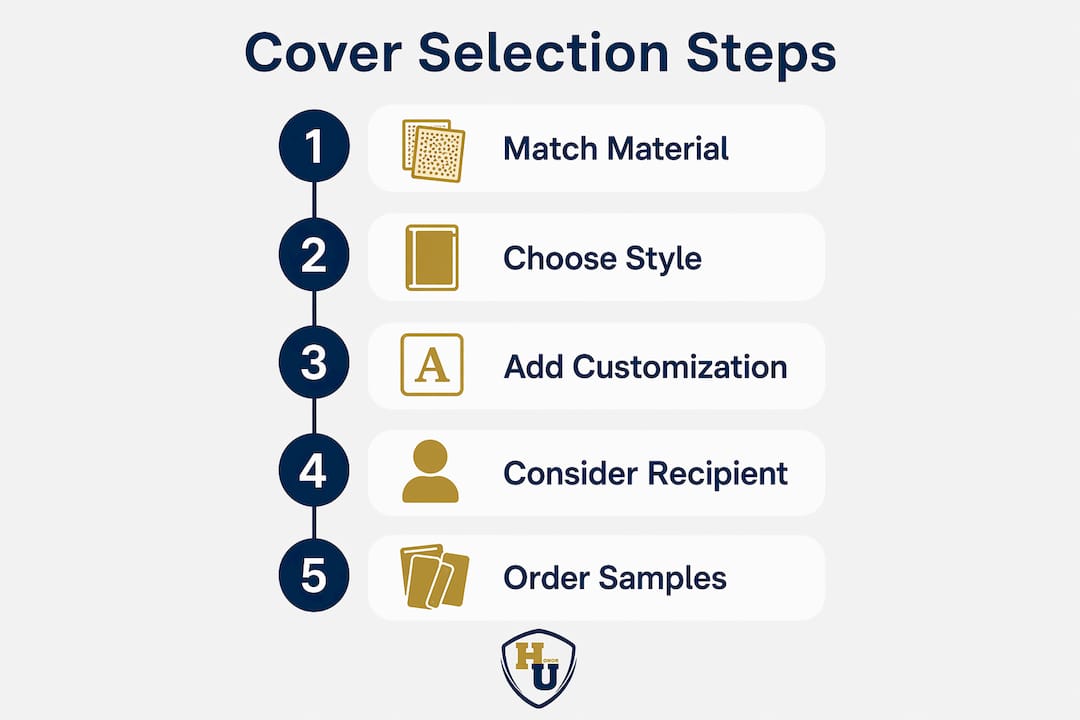
The document cover selection guide from Wehonoru outlines how to match cover type to document size and occasion, which is particularly useful for organizations managing multiple recognition programs with varying document dimensions.
Customization options that add meaning
Customization options allow covers to connect the achievement with the identity and culture of the awarding body. The most impactful customization elements include:
| Customization Element | Impact on Recognition |
|---|---|
| Institutional logo in metallic foil | Ties the award directly to the organization’s brand and prestige |
| Recipient name or program title | Confirms the recognition is personal, not generic |
| Custom color selection | Aligns the cover with school, corporate, or event colors |
| Pre-phrased or custom text | Communicates the specific achievement clearly on the cover itself |
| Made-to-fit sizing | Ensures non-standard documents are presented without awkward gaps or folds |
Cultural appropriateness also shapes cover selection. Religious organizations presenting baptism or confirmation certificates often prefer traditional, understated designs. Military and government agencies typically require formal, dark-toned covers that reflect institutional gravity. Healthcare organizations displaying board certifications in patient-facing areas need covers that project professional credibility at a glance.
Pro Tip: Order a single sample cover before committing to a bulk run. Reviewing the physical product in hand, under the lighting conditions of your actual ceremony or office, reveals details that digital mockups miss, including how foil colors read at a distance and how the cover feels when opened.
Recipient preferences matter as much as organizational aesthetics. Matching recognition style to recipient preferences and delivering recognition promptly amplifies impact more than award cost or format. A cover that feels right to the recipient, whether that means understated elegance or bold institutional branding, reinforces the authenticity of the moment.
When and how should covers be presented for maximum impact?
The timing and setting of a cover presentation determine whether the recognition lands or fades. Recognition delivered the same day or week of the achievement has significantly higher impact than recognition that arrives weeks later. A diploma cover presented at a graduation ceremony on the day of completion carries far more weight than the same cover mailed three weeks afterward.
The following sequence produces the most effective cover-based recognition presentations:
-
Choose the right setting. Formal ceremonies, such as graduation days, annual award banquets, and promotion announcements, provide the highest-visibility context for cover presentations. Informal settings, such as team meetings or one-on-one check-ins, work better for recipients who prefer private recognition over public ceremony.
-
Prepare the cover in advance. A cover that arrives pre-assembled, with the document already inside and the recipient’s name visible, communicates preparation and respect. Fumbling with loose papers at the moment of presentation undermines the ceremony.
-
Verbalize the specific achievement. Handing over a covered certificate without explaining why misses the primary goal of reinforcing positive behavior. State the achievement clearly: “This cover holds your certification in advanced cardiac life support, earned after completing 120 hours of clinical training.” That specificity transforms a physical handoff into a meaningful moment.
-
Allow time for the recipient to open and examine the cover. The unboxing experience requires a pause. Rushing past it to the next agenda item signals that the organization values efficiency over the person being honored.
-
Photograph the presentation. A photo of the recipient holding their covered award creates a lasting record that can be shared internally, posted to organizational communications, or given to the recipient as a secondary keepsake.
-
Follow up in writing. A brief note, whether digital or handwritten, that references the specific achievement reinforces the recognition beyond the ceremony itself.
Cultural and organizational traditions shape how these steps are weighted. Military and government organizations tend to favor formal, structured presentations with precise language. Schools and universities often build the cover presentation into a choreographed stage ceremony. Corporate HR departments increasingly blend formal cover presentations with digital recognition posts to reach remote team members simultaneously.
The certificate display best practices developed for educators and HR professionals offer detailed guidance on how to structure presentation settings for maximum impact across different organizational contexts.
What are creative achievement recognition ideas using covers?
Recognition programs that rely on a single format eventually produce recognition fatigue. Tiered recognition structures avoid this problem by ensuring each achievement level is properly acknowledged with appropriate presentation materials. Covers are versatile enough to support a wide range of creative recognition formats beyond the standard graduation ceremony.
Peer-to-peer recognition with covers
Peer recognition programs gain credibility when they include a physical component. A team member who nominates a colleague for a “Mentor of the Quarter” award can present a covered certificate at a team meeting, making the recognition visible and tangible rather than a digital notification that disappears in an inbox. Safe Boating America uses gift certificates as part of their recognition and incentive programs, demonstrating how physical presentation materials extend the impact of peer-driven acknowledgment across diverse organizations.
Wall of wins displays
A “wall of wins” is a dedicated display area where covered certificates and diplomas are mounted or arranged to celebrate ongoing achievements. Schools use this format for honor roll recognition. Corporate offices use it for sales milestones, training completions, and employee of the month awards. The key is selecting covers that stand upright or frame well, making tent-style covers particularly effective for desk-level displays and flat-panel covers ideal for wall mounting.
Pro Tip: Rotate the wall of wins display quarterly. Keeping the same covers visible for months reduces their motivational effect. A fresh rotation signals that new achievements are continuously being recognized, which encourages ongoing performance.
Tiered cover designs for varying achievement levels
- Entry-level achievements: Use pre-phrased, standard-size covers in the organization’s primary color. These work for participation certificates, training completions, and first-year milestones.
- Mid-level achievements: Add a foil-stamped logo and the recipient’s name. These covers signal that the organization invested additional effort in the recognition.
- Top-tier achievements: Use premium materials, custom sizing, and full metallic foil printing with custom text. Reserve these for annual awards, doctoral degrees, and career milestone recognitions.
Incorporating covers into digital and hybrid recognition programs
Frequent and specific recognition maintains morale and connection in distributed environments. For remote or hybrid teams, the physical cover becomes even more powerful because it arrives in a context where most recognition is purely digital. Shipping a custom-covered certificate to a remote employee’s home address, paired with a digital announcement to the full team, combines the reach of digital recognition with the permanence of a physical award. The cover makes the recognition real in a way that a Slack message or email cannot replicate.
Themed cover designs also serve as motivational tools. A healthcare organization might use covers in clinical blue with a caduceus emblem for medical certifications. A fitness studio might use bold, energetic colors for personal training credentials. Themed designs reinforce the identity of the achievement itself, not just the identity of the awarding organization.
Key Takeaways
Custom document covers transform achievement recognition from a transactional handoff into a meaningful, lasting ceremony that recipients remember and display with pride.
| Point | Details |
|---|---|
| Covers create a first impression | The physical cover is the first thing recipients see; quality materials signal organizational investment in their achievement. |
| Personalization drives authenticity | Covers with logos, names, and custom text confirm the recognition was made for the individual, not pulled from a generic supply. |
| Timing amplifies impact | Recognition delivered the same day or week of achievement produces significantly higher motivation than delayed presentations. |
| Tiered covers prevent fatigue | Matching cover quality to achievement level keeps recognition meaningful and avoids the “assembly line” effect. |
| Verbal specificity completes the moment | Presenting a cover without naming the specific achievement misses the primary goal of reinforcing positive behavior. |
Why covers are the most underrated tool in recognition culture
I have reviewed recognition programs across education, corporate HR, and healthcare settings for years. The single most consistent gap I observe is not budget, not timing, and not program structure. It is the physical presentation of the award itself.
Organizations spend considerable effort designing recognition criteria and selecting recipients. Then they hand over a loose certificate in a plain folder, or worse, mail it in a standard envelope. The recipient opens it at their desk, alone, and files it away. The recognition happened. The moment did not.
A well-chosen cover changes that equation. It signals that the organization thought about the presentation before the ceremony, not during it. That preparation communicates respect. Recipients feel it immediately, even if they cannot articulate why.
The other pattern I see consistently is organizations using the same cover for every achievement level. A participation certificate and a 20-year service award should not arrive in identical holders. Tiered cover designs are not about spending more money on top performers. They are about communicating that the organization understands the difference between achievements and treats each one accordingly.
Recognition fatigue is real, and generic presentation materials accelerate it. The solution is not more recognition events. It is more intentional ones, supported by presentation materials that match the weight of the moment.
— Manager
Wehonoru’s custom covers for every recognition moment
Wehonoru specializes in custom diploma covers, certificate holders, and tent-style presentation covers built for organizations that take recognition seriously. Every cover ships within one business day, with no minimum order quantity and free shipping on orders over $30.
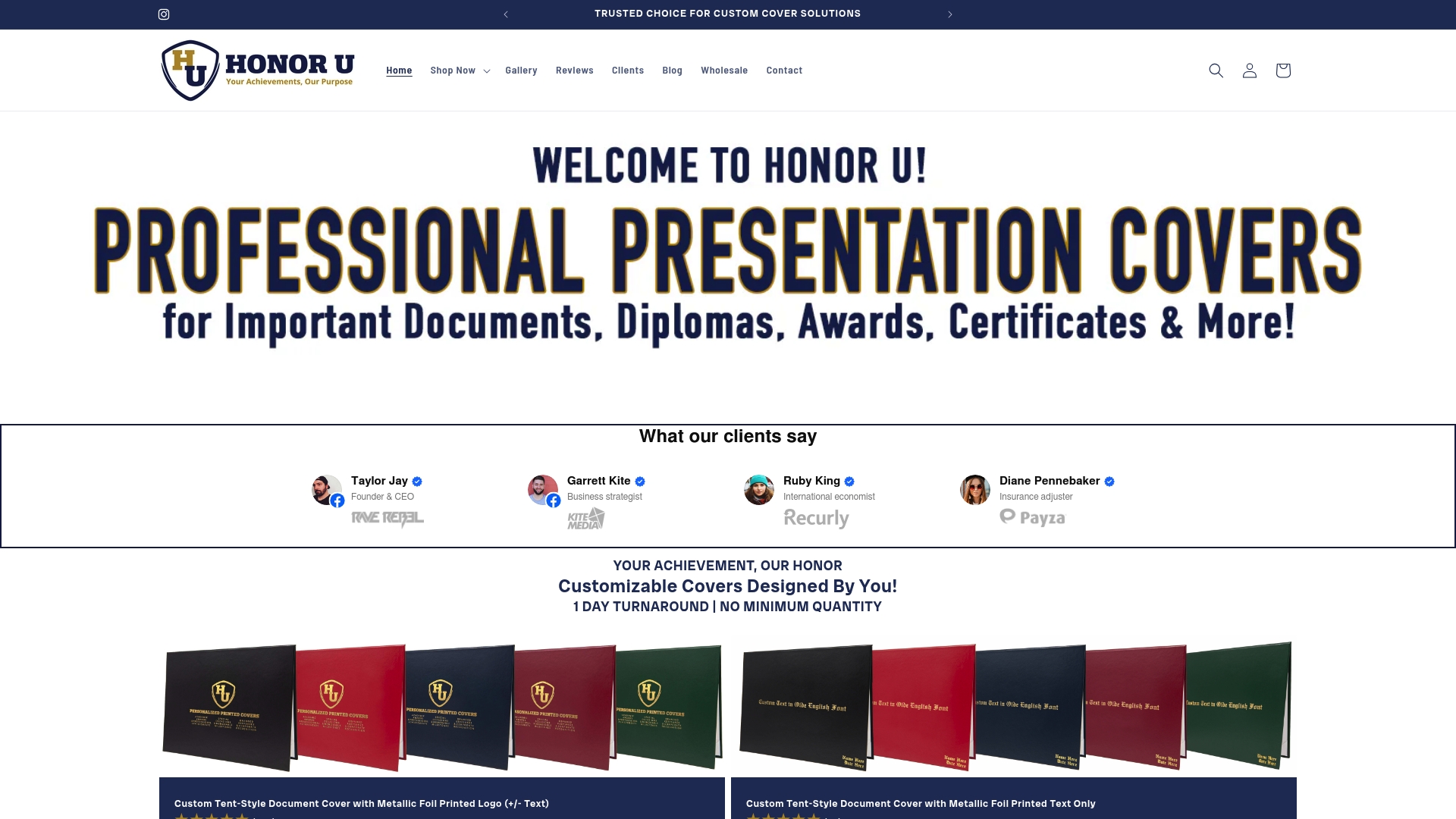
The Classic Diploma of Graduation tent-style cover stands upright on any desk or display surface, making it ideal for both ceremony presentations and permanent office display. For graduating classes, the Class of graduation year cover adds a personalized year imprint that gives the recognition an heirloom quality recipients keep for decades. Both options are available with custom metallic foil printing, institutional logos, and made-to-fit sizing for non-standard documents. Explore the full range of cover designs for awards to find the right presentation for your next recognition event.
FAQ
What does recognizing achievements with covers mean?
Recognizing achievements with covers means presenting diplomas, certificates, or awards inside custom-designed document holders that enhance the perceived value and ceremony of the recognition moment.
What cover type works best for graduation ceremonies?
Tent-style covers work best for graduation ceremonies because they stand upright for display and create a formal unboxing experience during the presentation. They are also suitable for long-term desk or shelf display after the event.
How important is personalization on a diploma or certificate cover?
Personalization is a key pillar of effective recognition according to Gallup research. Covers printed with the recipient’s name, institutional logo, or program title confirm the recognition is individual rather than generic, which increases its motivational impact.
When should a covered award be presented for the highest impact?
Recognition delivered the same day or week of the achievement produces the highest impact. Delayed presentations, even with premium covers, lose a significant portion of their motivational effect.
Can covers be used for remote or hybrid team recognition?
Shipping a custom-covered certificate directly to a remote employee’s address, paired with a digital team announcement, combines the reach of digital recognition with the permanence of a physical award. This approach is particularly effective for distributed teams where in-person ceremonies are not possible.