
Presentation Cover Options 2026: A Complete Style Guide

TL;DR:
- Presentation covers in 2026 combine durability with visual prestige to mark achievements effectively. They are selected based on binding type, material quality, and customization options, tailored to document use and institutional image. Proper design, material choice, and customization ensure covers protect documents and reinforce organizational credibility.
Presentation covers for diplomas and certificates are defined as protective document enclosures that combine physical durability with visual prestige to mark significant achievements. In 2026, the best presentation covers balance three demands simultaneously: material quality that preserves documents for decades, design clarity that communicates institutional credibility at a glance, and customization depth that aligns with specific brand or event requirements. Whether you represent a university awarding hundreds of degrees, a corporate HR team recognizing employee milestones, or a family honoring a single graduate, the cover you choose shapes how that achievement is perceived the moment it is handed over. This guide covers every major decision point, from binding types and stock weights to foil stamping and custom sizing, so you can select with confidence.

What are the main presentation cover options 2026 has to offer?
The diploma and certificate cover market in 2026 divides cleanly into four binding categories, each suited to different document weights, use frequencies, and presentation contexts.
Wire-O binding is the leading choice for multi-page presentation booklets. Wire-O binding supports 350+ pages and allows documents to lay completely flat, which is particularly useful for award programs, ceremony booklets, and training completion packets. The premium feel comes from pairing wire-O hardware with 80–100 lb cover stock finished in gloss or silk coating.
Thermal binding uses heat-activated adhesive to create a clean, book-like spine. It works well for single-document presentations where a polished, permanent finish matters more than page-turning flexibility.
Comb binding remains popular in educational settings because the plastic comb allows pages to be added or removed after binding. This suits institutions that update certificate inserts or add supplementary materials.
Plastic coil binding offers the most flexibility for curved or irregular document shapes, and it holds up well under repeated handling in high-traffic environments like HR offices or training centers.
Comparing stock weights and material types
| Cover Type | Stock Weight | Material | Best Use Case |
|---|---|---|---|
| Standard diploma cover | 80 lb | PP or PVC | Single-use graduation ceremonies |
| Premium certificate holder | 100 lb | Leatherette or linen | Corporate and healthcare recognition |
| Tent-style document cover | Custom | Foil-stamped board | Display and heirloom presentation |
| Presentation booklet cover | 80–100 lb | Gloss or silk coated | Multi-page award programs |
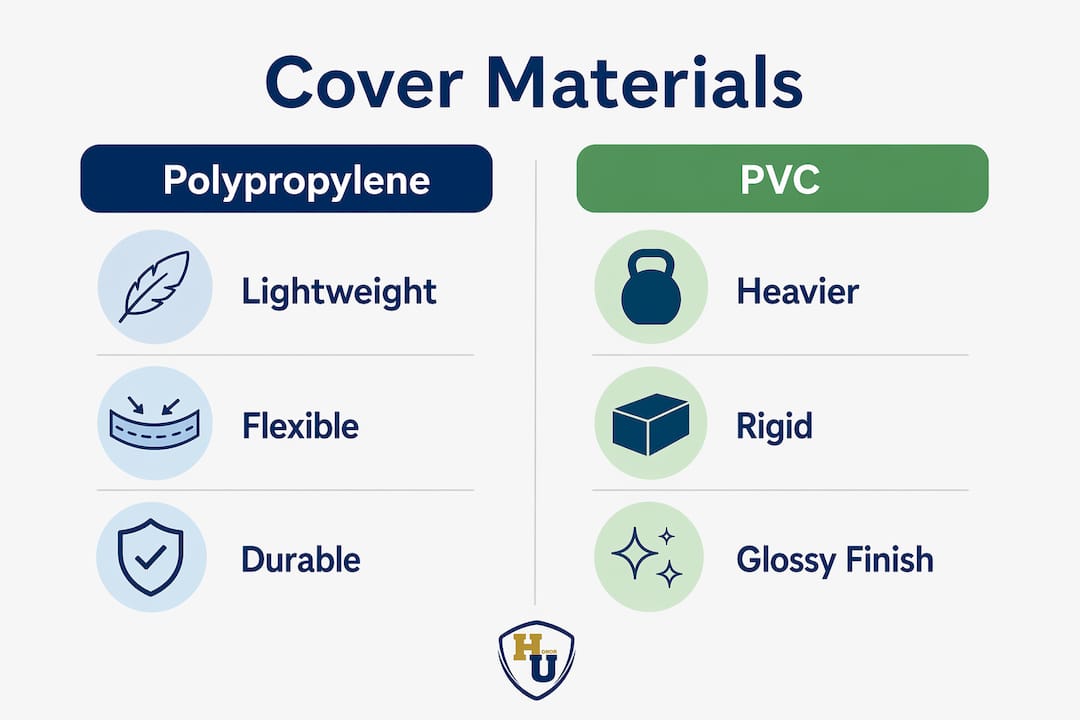
Polypropylene (PP) and PVC are the two dominant plastic materials for physical covers. PP is lighter and more flexible, while PVC offers greater rigidity and a more formal appearance. For heirloom documents like diplomas or marriage certificates, leatherette and linen textures add a tactile quality that reinforces the significance of the occasion.
Unpunched covers are preferred in 2026 for maximum binding system versatility. An unpunched cover can be used with thermal, comb, wire-O, or plastic coil systems, which is critical when you are producing a one-time document that cannot be reprinted if a binding error occurs.
Pro Tip: Order unpunched covers whenever the final binding method has not been confirmed. You retain full flexibility and eliminate the risk of a pre-punched cover misaligning with your chosen binding system.
Finish options include gloss, silk, matte, spot UV, foil stamping, and embossing. Gloss finishes maximize color vibrancy and are ideal for image-heavy covers. Matte finishes reduce glare and project a quieter, more formal tone. Spot UV applies a high-gloss coating to selected areas only, which is effective for highlighting logos or institutional seals against a matte background.
How do design principles impact the effectiveness of presentation covers?
Cover design is the primary signal of credibility before a recipient reads a single word inside. Cover pages establish trust instantly through quality materials combined with a simple, coherent color scheme. The design principles that govern effective covers in 2026 are grounded in viewer psychology and accessibility standards.
The 3-second rule is the foundational constraint for cover design. A viewer forms a judgment about a document’s quality and authority within three seconds of seeing its cover. This means every design element must earn its place immediately.
The core design standards for 2026 covers include:
- Element limit: Restrict the cover to 4–6 core design elements, typically the title, subtitle, issuing organization name, date, logo, and one supporting graphic or seal.
- Word count: Keep cover text under 50 words total. Diploma and certificate covers rarely need more than 10–15 words.
- Title font size: The main title should render at 60–80 points on printed covers to establish clear visual hierarchy.
- Color contrast: Maintain a minimum contrast ratio of 4.5:1 between text and background. This standard, drawn from Web Content Accessibility Guidelines (WCAG), applies equally to print materials intended for diverse audiences.
- Brand color discipline: Use no more than 2–3 brand colors per cover. More than three colors fragment the visual framework and undermine the institutional authority the cover is meant to convey.
Pro Tip: Test your cover design in grayscale before finalizing. If the hierarchy and key information remain clear without color, the design is structurally sound and will reproduce well across all printing conditions.
Design intent also varies by audience and purpose. Investor decks favor text-heavy, clear messaging while marketing materials benefit from high-impact images or product-focused covers. For diplomas and certificates, the equivalent distinction is between formal institutional covers, which prioritize crest placement and serif typography, and corporate recognition covers, which may incorporate photography or bold brand graphics to reflect company culture.
The shift away from generic templates is the defining trend in cover design for 2026. Organizations that previously used off-the-shelf designs are now investing in covers that reflect specific institutional identity. A university seal rendered in gold foil on a navy cover communicates something fundamentally different from a plain black folder with a printed label. The cover is not decoration. It is the first chapter of the document’s story.
What practical considerations ensure durability for physical diploma covers?
Physical diploma and certificate covers face a specific set of durability demands. They must survive shipping, handling during ceremonies, and decades of storage without curling, fading, or losing structural integrity.
-
Choose 12 mil thickness for frequent-use covers. The standard thickness for presentation covers is 8 mil. However, 12 mil thickness prevents edge curling and corner damage in high-traffic environments. For covers that will be handled repeatedly, such as those used in HR offices or displayed in healthcare facilities, 12 mil is the correct specification.
-
Account for content thickness before ordering. Misjudging content thickness is one of the most common ordering errors. A diploma with a supplementary transcript, a letter of congratulations, and a program insert requires a cover with a gusseted or expansion pocket. A standard flat cover will bow and lose its professional appearance within days.
-
Specify size precisely. Standard US letter (8.5 x 11 inches) and A4 (8.27 x 11.69 inches) are the two most common document sizes, but many diplomas, military commendations, and specialty certificates fall outside these dimensions. Custom-sized covers are the only correct solution for non-standard documents.
-
Prioritize sand-textured or grip finishes for ceremony use. Covers handed to recipients during live ceremonies must not slip. A sand-textured finish on the exterior provides grip for both the presenter and the recipient, reducing the risk of a dropped document during a photographed moment.
-
Verify water resistance for long-term storage. Covers intended for archival or display purposes should carry a water-resistant coating. This is particularly relevant for marriage certificates, military awards, and professional licenses that may be stored for 20 or more years.
| Feature | Standard Cover | Premium Cover |
|---|---|---|
| Thickness | 8 mil | 12 mil |
| Pocket type | Flat | Gusseted or expansion |
| Finish | Gloss or matte | Foil stamp, spot UV, or emboss |
| Size options | US letter or A4 | Custom dimensions available |
| Water resistance | Basic | Full coating |
Pro Tip: When ordering covers for a graduation ceremony, always request one sample unit before placing the full order. Verify that the cover lies flat when closed, opens smoothly, and holds the actual document without buckling at the spine.
The custom diploma cover guide from Wehonoru provides detailed sizing specifications for non-standard documents, which is particularly useful for institutions with oversized or landscape-format diplomas.
How can organizations customize covers to align with brand identity?
Customization is the defining factor that separates a memorable presentation cover from a forgettable one. Strategic customization differentiates covers by objective, and the same principle applies to physical diploma and certificate covers. The cover must be designed with the recipient and the occasion in mind, not simply with aesthetics as the primary driver.
The most effective customization options available in 2026 include:
- Foil stamping: Metallic foil applied to logos, seals, or text creates a tactile, heirloom-quality finish that no digital print can replicate. Gold and silver foil remain the most requested colors for educational and government documents. Foil stamping requires high-contrast vector logos to produce clean, crisp results after heat and pressure application. Submit artwork in vector format (AI or EPS) at a minimum of 300 DPI to avoid blurring.
- Embossing and debossing: Raised or recessed logos add a three-dimensional quality to covers without the reflective surface of foil. Embossing is particularly effective on leatherette covers for a classic, understated prestige.
- Spot UV coating: Applying a high-gloss UV layer to a specific element, such as a university crest or company logo, against a matte background creates a striking visual contrast that draws the eye immediately.
- Matte lamination: A full-cover matte laminate finish projects quiet authority. It is the preferred choice for legal, healthcare, and government documents where restraint signals professionalism.
- Custom die-cut windows and pockets: Die-cut options enable business card holders and other functional inserts, turning a cover into a complete presentation package. For corporate recognition programs, a die-cut window that reveals the recipient’s name through the cover adds a personalized touch without requiring individual printing for each unit.
- Custom tabbing and compartment configurations: Tabbed interior sections help recipients navigate multi-document packages, such as a diploma paired with a transcript and a letter from the institution’s president.
Color selection is the most visible customization decision. Brand guidelines should govern the primary cover color, with foil or print accents drawn from the secondary palette. For institutions without formal brand guidelines, the education and HR folder guide from Wehonoru outlines color selection frameworks used by schools and corporate training departments.
Custom pockets and die-cuts significantly improve folder usability and stakeholder retention. This finding reflects a broader truth about physical presentation materials: recipients keep well-designed covers. A diploma cover that doubles as a display stand, or a certificate holder with a business card pocket, remains in use long after the ceremony ends. That extended presence reinforces the issuing organization’s brand every time the cover is seen.
Different sectors prioritize different customization elements. Education institutions favor institutional seals and traditional color palettes. Healthcare organizations require clean, professional finishes that project clinical credibility. Creative industries and marketing firms lean toward bold graphics and high-contrast color combinations. Legal and government agencies default to conservative, text-forward designs with minimal ornamentation. Understanding your sector’s visual conventions is as important as understanding your own brand guidelines.
Key takeaways
The most effective presentation covers in 2026 combine precise material specifications, disciplined design principles, and purposeful customization to protect documents and project institutional credibility from the first moment of contact.
| Point | Details |
|---|---|
| Binding system selection | Choose wire-O for multi-page booklets; select unpunched covers to preserve binding flexibility for heirloom documents. |
| Material and thickness | Specify 12 mil thickness for high-traffic or long-term use covers to prevent curling and corner damage. |
| Design discipline | Limit covers to 4–6 elements, maintain a 4.5:1 contrast ratio, and use no more than 2–3 brand colors. |
| Foil stamping preparation | Submit logos as high-contrast vector files before ordering foil-stamped covers to guarantee crisp results. |
| Custom sizing and pockets | Order made-to-fit covers for non-standard documents and include gusseted pockets when content thickness exceeds a standard diploma. |
Why cover quality is the detail most organizations underestimate
I have reviewed hundreds of diploma and certificate presentations across education, corporate, and government contexts. The single most consistent mistake I observe is treating the cover as an afterthought. Organizations spend months planning a ceremony, designing the certificate itself, and coordinating logistics, then order the cheapest available cover two days before the event.
The cover is the first physical object a recipient touches. It sets the emotional register for everything inside. A flimsy cover communicates that the issuing organization values efficiency over the significance of the moment. A well-constructed cover with a foil-stamped seal communicates the opposite: that the achievement being recognized is worth protecting and displaying with pride.
The trend I find most encouraging in 2026 is the move toward covers that function as display pieces, not just protective sleeves. Tent-style covers that stand upright on a desk, foil-stamped with the recipient’s name and the issuing institution’s seal, serve as permanent reminders of the achievement. They stay visible. They get noticed by visitors. They do the work of institutional branding long after the ceremony ends.
My practical advice: match the cover specification to the document’s expected lifespan. A training completion certificate that will be filed away after a compliance audit does not need 12 mil leatherette with gold foil. A doctoral diploma that will be displayed in an office for 30 years absolutely does. Calibrate your investment to the occasion, and you will never overspend or underdeliver.
The shift from generic to custom is not a luxury trend. It is a recognition that the documents inside these covers represent real human effort and real institutional commitment. The cover should reflect both.
— Manager
Wehonoru’s tent-style diploma covers: built for the moment that matters
Wehonoru produces durable, tent-style diploma and certificate covers with metallic foil printing, shipped within one business day of your order. No minimum order quantities and no setup fees mean you can order a single cover for a homeschool graduate or 500 covers for a university commencement with equal ease.
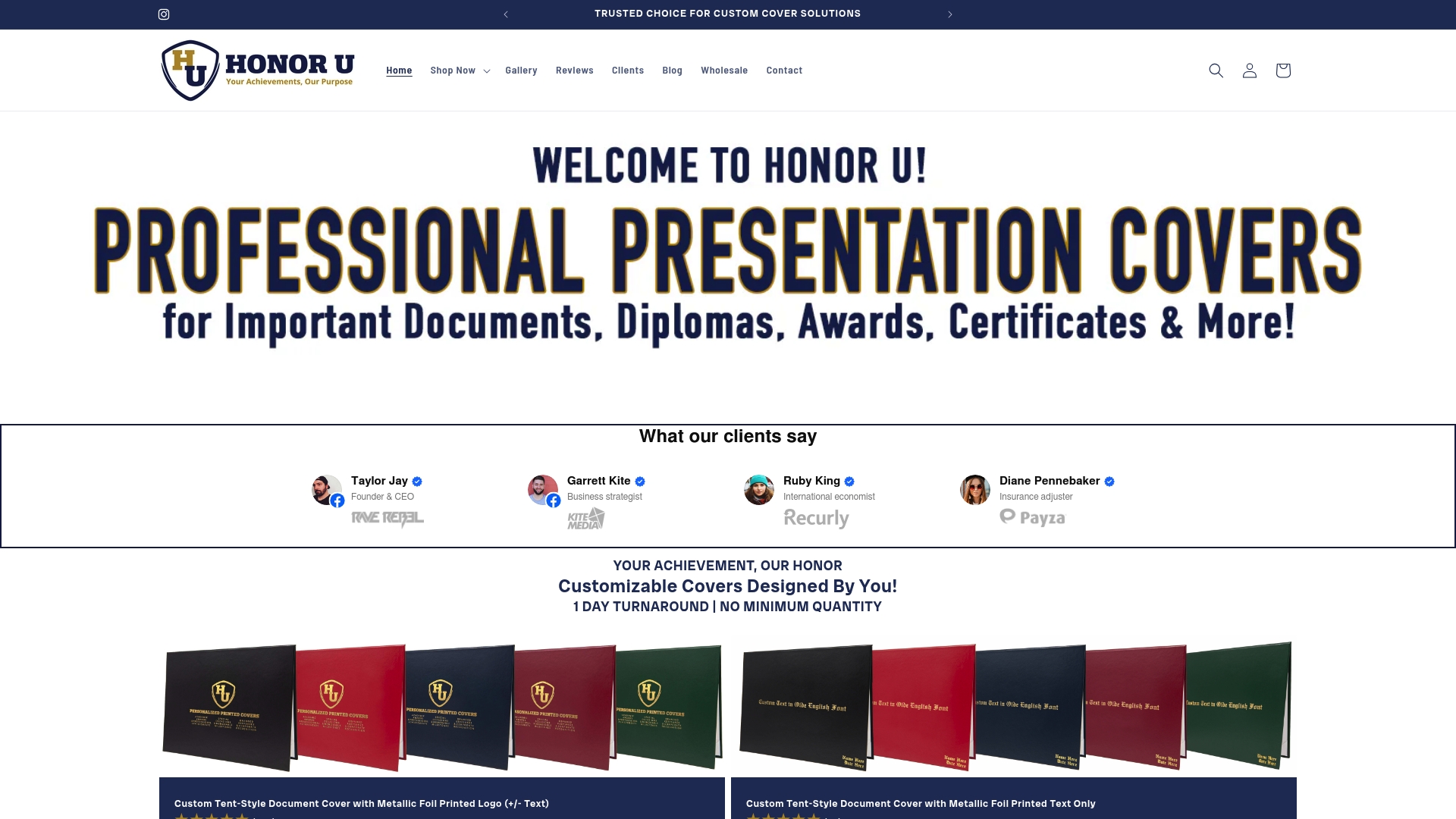
Each classic graduation diploma cover is available in multiple colors with custom foil options for institutional logos, recipient names, and event-specific text. For high school ceremonies, the high school diploma tent cover delivers the same premium finish at a price point accessible to schools of every size. Free shipping applies to orders over $30, and every cover is made to fit your document’s exact dimensions.
FAQ
What binding type is best for diploma presentation covers?
Wire-O binding is the top choice for multi-page presentation booklets in 2026, supporting 350+ pages with a flat-open design. For single diplomas, tent-style or thermal-bound covers provide a cleaner, more formal finish.
How many design elements should a certificate cover include?
Effective certificate covers limit design elements to 4–6 items, including the title, organization name, logo, and date, with total text kept under 50 words for immediate visual clarity.
What thickness should I specify for a diploma cover?
Specify 12 mil thickness for covers that will be handled frequently or displayed long-term. Standard 8 mil covers are acceptable for single-use ceremonies where the cover will be stored immediately after the event.
Are unpunched covers better for custom-sized diplomas?
Unpunched covers are the preferred choice for custom-sized or heirloom documents because they remain compatible with all binding systems, eliminating the risk of pre-punched holes misaligning with non-standard document dimensions.
How do I prepare artwork for foil-stamped diploma covers?
Submit logos as high-contrast vector files in AI or EPS format at a minimum of 300 DPI. Foil stamping requires clean vector artwork to produce sharp, consistent results after heat and pressure application.