
Certificate Cover Buying Guide 2026: Styles and Materials

TL;DR:
- A certificate cover is a protective accessory that enhances the presentation and preservation of awards and documents. Choosing the right style, material, and customization options ensures it matches the occasion and maintains professional appearance. Proper selection and care extend the life and impact of both the certificate and its cover.
A certificate cover is a protective and presentation accessory designed to preserve and showcase certificates with professionalism and style. Choosing the right one matters more than most buyers realize. The wrong cover can undermine the prestige of a hard-earned credential, while the right one adds an heirloom feel that recipients remember for years. This certificate cover buying guide 2026 walks you through every decision point, from material and style selection to customization options and ordering logistics, so you can present every achievement with the dignity it deserves.
What certificate cover styles are available and how do you choose?
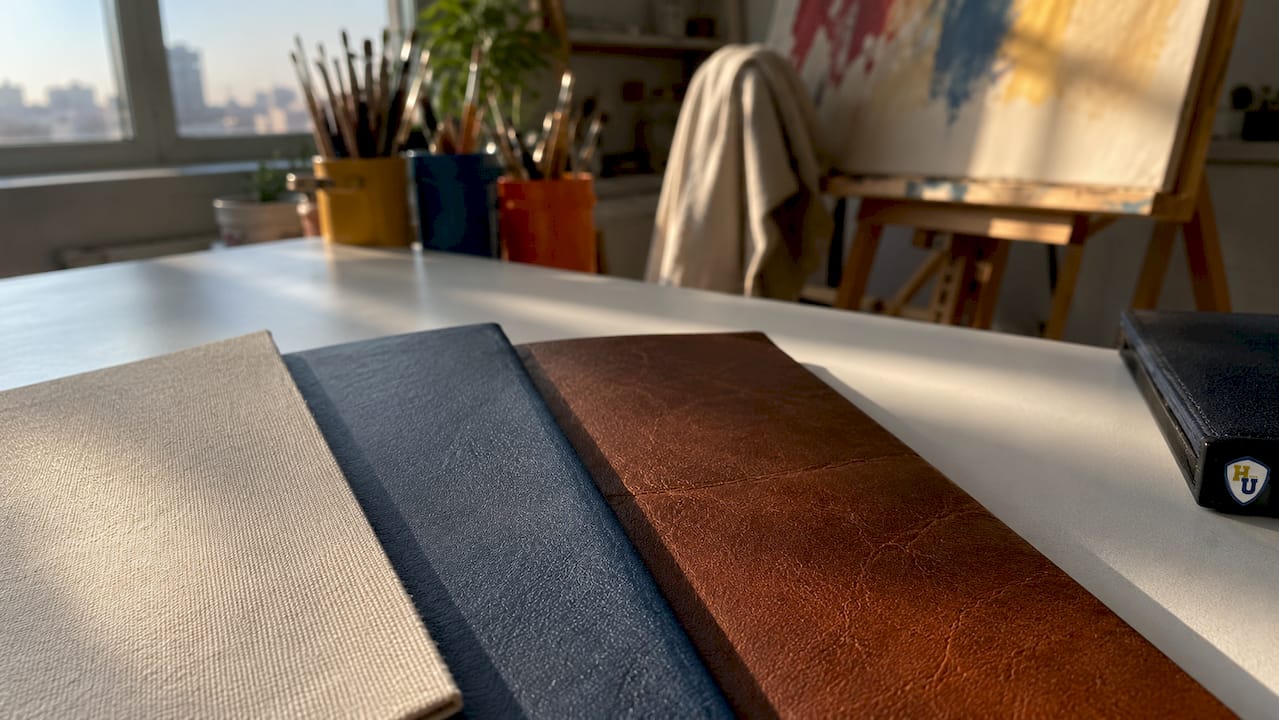
Certificate covers, also called certificate holders or diploma folders, fall into four primary styles. Each serves a different purpose, and matching the style to your occasion is the first decision to make.
Single-folder covers are the most common entry-level option. They open like a book and hold one document securely inside a pocket or spine clip. Schools and nonprofits frequently use them for participation certificates and training completions because they are affordable and easy to produce in volume.
Tent-style covers stand upright on a flat surface, displaying the certificate like a framed piece. They are the preferred format for graduation ceremonies, corporate award banquets, and medical licensing presentations. The tent design adds a three-dimensional presence that a flat folder cannot replicate.
Diploma folders are a refined version of the single-folder style, typically featuring a heavier board construction, interior ribbon ties, and a gold or silver foil seal area. Universities and professional associations favor them for degree conferral and board certification presentations.
Framed options combine a rigid frame with a mat board and glass or acrylic front. They are best suited for credentials meant for permanent wall display, such as medical licenses, law degrees, or military commendations.
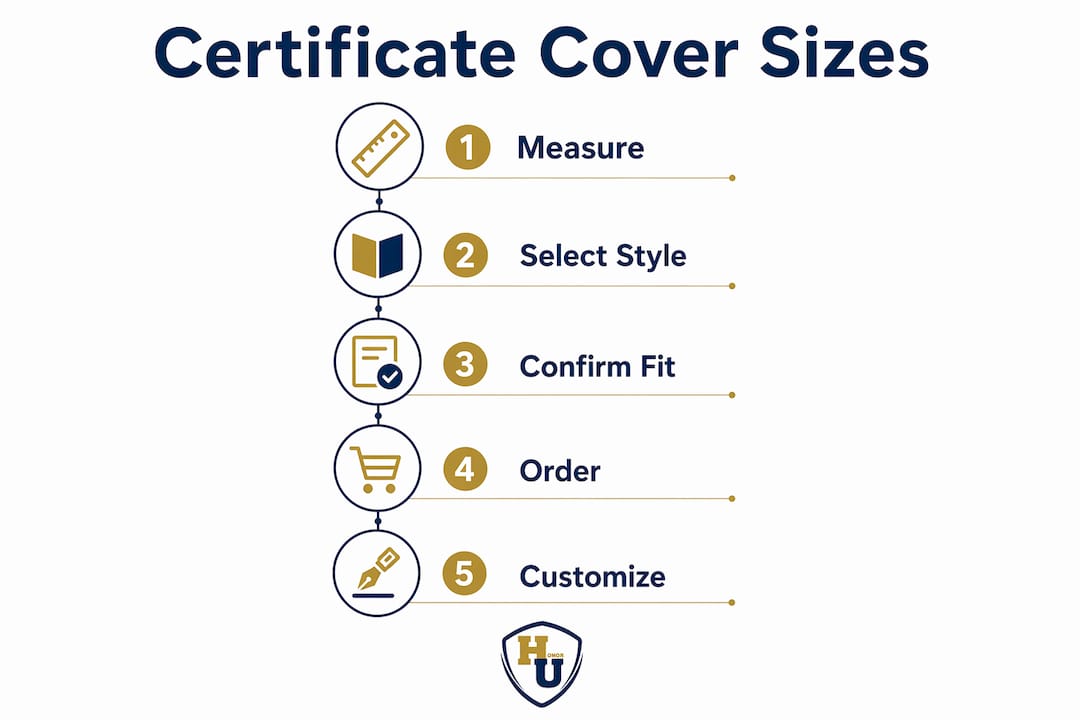
Matching style to occasion requires knowing your certificate dimensions before ordering. Standard certificate sizes include A4 portrait (230x320 mm), A4 landscape (320x230 mm), and A5 portrait (170x235 mm), with bespoke sizes available for unique documents. Size selection directly affects which cover styles will fit and protect the document properly.
| Style | Best for | Typical dimensions | Pros | Cons |
|---|---|---|---|---|
| Single folder | Training certs, participation awards | A4, A5, letter | Affordable, lightweight | Less formal appearance |
| Tent-style | Graduation, corporate awards | Letter, A4, custom | Display-ready, prestigious | Requires flat surface |
| Diploma folder | University degrees, professional certs | Letter, A4, legal | Premium feel, durable | Higher cost |
| Framed option | Wall display, medical/law credentials | Custom | Permanent, impressive | Bulky, expensive |
Pro Tip: Measure your printed certificate before ordering any cover. A cover that is even a quarter-inch too small will buckle the document and ruin the presentation.
What materials and pricing should you expect for certificate covers?
Material choice is the single biggest driver of cost, durability, and perceived quality. Understanding your options prevents overspending on features you do not need and underspending on covers that will not hold up.
PU leather is the most popular material for certificate covers, representing about 70% of orders. It mimics genuine leather closely, accepts foil stamping well, and costs significantly less than real leather. For most schools, HR departments, and corporate training programs, PU leather delivers the right balance of professionalism and value.
Linen-wrapped board offers a textured, fabric-like surface that reads as formal and traditional. It is a strong choice for religious organizations, academic institutions with heritage branding, and any context where a classic aesthetic matters more than a modern one.
Genuine leather carries the highest material cost but also the strongest heirloom quality. It ages gracefully, holds embossing with exceptional depth, and signals prestige in high-stakes presentations such as law firm partner recognitions or military commendations.
Paper and card stock folders sit at the entry level. They work well for high-volume, low-budget applications like youth sports participation awards or community service certificates where quantity matters more than longevity.
Certificate cover prices vary significantly by material and quality. That range reflects a wide spectrum of use cases, from classroom awards to executive recognition programs.
| Material | Price range per unit | Durability | Best use case |
|---|---|---|---|
| Paper/card stock | $1.20–$3.50 | Low | High-volume, budget events |
| PU leather | $15–$60 | High | Graduation, corporate awards |
| Linen-wrapped board | $20–$55 | Medium-high | Academic, religious ceremonies |
| Genuine leather | $75–$365+ | Very high | Executive, legal, military |
| Framed glass | $75+ | Very high | Permanent wall display |
Budget planning also requires factoring in customization costs. A plain PU leather cover at $20 per unit can climb to $35 or more once foil stamping and logo printing are added. Order volume affects unit price significantly, so bulk buyers should always request tiered pricing before committing.
Pro Tip: If your budget is tight but presentation quality matters, choose a mid-range PU leather cover with a single-color foil imprint. The result looks premium at a fraction of the cost of genuine leather.
What customization options are available for certificate covers?
Customization transforms a generic folder into a branded recognition piece. The four most common techniques each produce a different visual and tactile result.
-
Foil stamping presses metallic foil into the cover surface using a heated die. Gold, silver, and copper are the most requested colors. Foil stamping and embossing add formal prestige and increase the perceived value of both the certificate and the cover. This technique works best on PU leather and genuine leather surfaces.
-
Embossing creates a raised or recessed impression without adding color. It produces a subtle, tactile effect that reads as understated luxury. Law firms, medical institutions, and universities frequently choose embossing for its restraint and permanence.
-
Digital UV printing applies full-color artwork directly to the cover surface. It is the best option for covers requiring photographic imagery, multi-color logos, or detailed graphics. UV printing works on a wider range of materials than foil stamping but may not carry the same formal weight.
-
Logo and text printing covers institutional names, graduation years, degree titles, and recipient names. Pre-phrased covers with standard language like “Diploma of Graduation” or “Certificate of Completion” are available off the shelf. Fully custom text requires a proof and approval cycle before production begins.
Customization turnaround times vary by technique and material. PU leather with foil stamping typically requires 18–25 working days. Genuine leather requires 25–35 working days. These timelines assume the design is approved without revision. Each round of proof changes adds time, so submitting final artwork at the start of the process is critical.
Order minimums for custom certificate covers traditionally start at 50–100 units. Providers now offer no-minimum options for individual or small-batch orders, which helps organizations and individuals avoid excess inventory and unnecessary cost. Wehonoru, for example, accepts orders starting at a single unit with no setup fees, which is rare in the custom presentation products market.
Working effectively with suppliers on custom orders requires clear communication from the start. Provide vector-format logo files, specify exact Pantone or foil color codes, and confirm the proof in writing before approving production. These steps prevent costly reprints and missed deadlines.
How do you select and purchase the right certificate cover?
A clear process prevents the most common purchasing mistakes, including ordering the wrong size, choosing the wrong material for the occasion, and missing production deadlines.
-
Define your purpose and volume. A single graduation gift requires a different approach than 500 corporate award covers. Knowing your quantity upfront determines whether you need a no-minimum supplier or a bulk pricing negotiation.
-
Measure your certificate. Collect the exact dimensions of the printed document, including any border or seal area. Add at least a quarter-inch of clearance on all sides when selecting a cover size. Non-standard documents, such as military commendations or oversized diplomas, require made-to-fit covers.
-
Rank your priorities. Decide whether style, budget, or customization matters most for your specific event. A corporate HR department presenting quarterly awards may prioritize consistent branding. A parent ordering a single graduation cover may prioritize speed and quality over cost.
-
Select a trusted supplier and request samples. Before committing to a large order, request physical samples of the material and finish you plan to order. A sample eliminates guesswork about color accuracy, texture, and construction quality. Wehonoru ships samples and offers custom certificate cover options with no minimum order requirement.
-
Plan your timeline around production. Order lead times range from 18 to 35 working days depending on style and customization level. Add shipping time and at least one week of buffer for proof revisions. Ordering well ahead of your event date is the single most effective way to avoid last-minute problems.
-
Review the proof carefully. Check spelling, logo placement, foil color, and cover dimensions before approving production. Common certificate design mistakes include poor font choices and crowded layouts. These same errors on a cover proof will be reproduced across your entire order.
Pro Tip: For large institutional orders, ask your supplier for a pre-production sample of the actual customized cover, not just a digital proof. Physical samples reveal color accuracy and construction quality that a screen cannot show.
Avoid these common pitfalls when purchasing certificate covers. Do not assume standard letter size fits all documents. Do not skip the proof approval step to save time. Do not order the minimum quantity without confirming the exact count needed, since reprints cost more per unit than adding extras to the original order.
How do you maintain and store certificate covers for longevity?
Proper care preserves both the cover and the document inside it. The right storage and cleaning practices extend the life of a cover from months to decades.
- PU leather covers should be wiped with a soft, dry cloth to remove dust and fingerprints. Avoid alcohol-based cleaners, which degrade the surface coating over time. Store PU leather covers flat or upright in a cool, dry environment away from direct sunlight, which causes fading and cracking.
- Linen-wrapped board covers are more sensitive to moisture than leather alternatives. Store them in acid-free sleeves or boxes to prevent yellowing. Do not stack heavy objects on top of linen covers, as the fabric surface compresses and loses its texture permanently.
- Genuine leather covers benefit from occasional conditioning with a leather-safe product to prevent drying and cracking. Keep them away from heat sources and high-humidity environments. Genuine leather stored correctly can last for generations and develops a richer patina over time.
- Framed covers require the same care as any framed artwork. Keep glass surfaces clean with a non-ammonia glass cleaner. Check the backing periodically for signs of moisture intrusion, which can damage the certificate inside.
Replace a cover when the spine cracks, the interior pocket tears, or the surface finish deteriorates to the point that it detracts from the document it holds. A damaged cover sends the wrong message about the achievement it contains. For graduation certificate covers that will be displayed or gifted, replacement is a worthwhile investment when the original shows visible wear.
Key takeaways
The most effective certificate cover purchase combines accurate size measurement, material selection matched to the occasion, and timeline planning that accounts for customization lead times of 18–35 working days.
| Point | Details |
|---|---|
| Match style to occasion | Tent-style covers suit graduation and awards; framed options work best for permanent wall display. |
| PU leather leads the market | PU leather represents about 70% of orders due to its premium look and foil-stamping compatibility. |
| Budget by material tier | Paper covers cost $1.20–$3.50; genuine leather and framed options start at $75 and can exceed $365. |
| Plan for production time | Custom orders require 18–35 working days; order early and confirm proofs before production begins. |
| No-minimum options exist | Suppliers like Wehonoru accept single-unit orders with no setup fees, ideal for individuals and small organizations. |
Why the cover matters as much as the certificate itself
My perspective on this comes from watching organizations spend months designing a beautiful certificate and then hand it over in a flimsy paper folder. The cover is the first thing a recipient touches. It shapes the emotional experience of the moment before the document is even seen.
The most common mistake first-time buyers make is treating the cover as an afterthought. They finalize the certificate design, confirm the event date, and then scramble to find covers with two weeks to spare. That timeline rules out most custom options and forces a compromise on quality. The fix is simple: start the cover selection process at the same time you start designing the certificate itself.
Organizations handling large orders face a different challenge. Consistency matters more than individual preference at scale. A university presenting 500 diplomas needs every cover to look identical. That requires a supplier with reliable quality control across the full production run, not just the sample. I always recommend requesting a mid-run quality check for orders over 100 units.
For individuals ordering a single cover, the calculus is different. Speed and quality matter most. A supplier that ships the next business day with no minimum order requirement is worth paying a slight premium for, because the alternative is waiting weeks for a cover that may not arrive before the ceremony. Wehonoru’s best diploma cover options are worth reviewing if you need a quality cover quickly without committing to a bulk order.
The long-term value of a quality cover is real. A genuine leather diploma folder stored properly becomes a family keepsake. A well-made tent-style cover displayed on a desk reinforces professional credibility every day. Investing an extra $10–$20 per unit in material quality pays dividends in how the achievement is perceived and remembered.
, Manager
Find the right certificate cover at Wehonoru
Wehonoru offers a full range of certificate and diploma covers built for both individual buyers and institutional orders. The classic tent-style graduation cover is one of the most popular options, combining a display-ready design with metallic foil printing and no minimum order requirement. For high school graduates, the classic high school diploma cover delivers the same quality in a format sized for standard diploma dimensions. Every order ships within one business day, and free shipping applies to orders over $35.
Custom sizing, logo foiling, and personalized text are available across the product line. Whether you need one cover for a family member’s graduation or 500 for a corporate recognition program, Wehonoru handles both without setup fees or minimum order requirements. Visit wehonoru.com to browse the full 2026 collection and place your order today.
FAQ
What is the difference between a certificate cover and a diploma cover?
A certificate cover and a diploma cover serve the same protective and presentation function. The terms are used interchangeably in the industry, though diploma covers often refer specifically to degree-conferral documents from colleges and universities.
What size certificate cover do I need?
Measure your printed certificate and add at least a quarter-inch of clearance on all sides. Standard sizes include A4 portrait, A4 landscape, and A5 portrait, but made-to-fit custom dimensions are available for non-standard documents.
How long does it take to receive a custom certificate cover?
Custom production takes 18–35 working days depending on material and technique. PU leather with foil stamping runs 18–25 days; genuine leather requires 25–35 days. Suppliers like Wehonoru ship standard covers the next business day.
Can I order a single certificate cover with custom printing?
Yes. Providers including Wehonoru accept single-unit orders with no setup fees. No-minimum ordering options are now widely available, making custom covers accessible for individuals and small organizations alike.
What material is best for a certificate cover that will be displayed long-term?
Genuine leather or a framed option with glass or acrylic is best for permanent display. Both materials hold up to handling and environmental exposure far better than PU leather or linen-wrapped board over a period of years.
Recommended
More on certificate covers
What is included, and which size to order, live on the FAQ.
Taylor Pace writes Honor U guides. Blair Black reviews them. Honor U sells empty covers and holders.