
Graduation certificate cover explained: protect and personalize

Most people think graduation certificate covers exist only to make diplomas look fancy at ceremonies. That’s wrong. These covers serve as the primary defense against physical degradation that can destroy your achievement documents within years. Beyond protection, personalized covers transform certificates into emotional keepsakes that graduates treasure for decades. This guide explains how to choose covers that protect documents properly, customize them for maximum impact, measure accurately for perfect fit, and order efficiently to meet tight ceremony deadlines.
Table of Contents
- Why Graduation Certificate Covers Matter: Protection And Preservation
- Customization Options: Enhancing Significance And Branding
- Choosing The Right Diploma Cover: Sizes, Types, And Materials
- Ordering And Production Tips For Seamless Graduation Cover Delivery
- Discover Customizable Diploma And Certificate Covers At Honor U
- Frequently Asked Questions
Key takeaways
| Point | Details |
|---|---|
| Protection extends lifespan | Covers prevent bending, fading, and moisture damage that degrades unprotected diplomas significantly faster. |
| Customization increases value | Personalized logos, names, and colors create emotional connections graduates maintain throughout their lives. |
| Accurate measurement matters | Precise diploma dimensions ensure covers fit properly without causing curling or document shifting. |
| Material choice affects durability | Archival-quality materials preserve certificates decades longer than standard paperboard options. |
| Lead time prevents delays | Starting orders 3 to 4 weeks before ceremonies ensures quality proofing and on-time delivery. |
Why graduation certificate covers matter: protection and preservation
Your diploma represents years of effort, thousands of dollars, and countless hours of dedication. Without proper protection, that document faces constant threats. Dust accumulates in exposed corners. Sunlight fades ink and paper. Humidity warps edges. Simple handling bends corners and creases surfaces.
Certificate covers create physical barriers against these hazards. Quality covers shield documents from ultraviolet light that yellows paper and bleaches text. They prevent accidental spills during celebrations. They stop fingers from depositing oils that attract dirt and accelerate deterioration. Diplomas stored without covers degrade up to 70% faster than protected documents, making covers essential for preservation.
Material selection determines protection effectiveness. Archival-quality options resist acid migration that causes paper breakdown over decades. Premium leatherette covers repel moisture while allowing minimal air circulation that prevents mold growth. Budget paperboard versions offer basic protection but lack long-term durability for documents you’ll display for 50 years.
Proper fit maintains diploma integrity throughout its lifespan. Covers sized too loosely allow documents to shift, creating friction that wears edges and corners. Overly tight covers force diplomas into unnatural positions, causing permanent creases and curls. A custom diploma cover guide ensures measurements match document dimensions precisely.
Common damage types that quality covers prevent include:
- Corner curling from repeated handling without rigid support
- Paper yellowing from ultraviolet exposure during display
- Ink fading caused by direct sunlight contact
- Edge fraying from friction against other stored documents
- Moisture stains from accidental liquid contact
Pro Tip: Select acid-free, archival-grade covers for diplomas you plan to preserve beyond 20 years, as standard materials begin degrading important documents after extended storage periods.
“The difference between a diploma that looks fresh after 30 years versus one that appears aged and damaged often comes down to a single decision: investing in proper protective covering from day one.”
Customization options: enhancing significance and branding
Personalization transforms functional covers into meaningful keepsakes. Adding school crests, graduate names, ceremony dates, and institutional logos converts generic holders into unique commemorations of specific achievements. This emotional connection explains why graduates with personalized covers report stronger emotional connections to their accomplishments years after ceremonies end.

Customization serves dual purposes for institutions. Schools reinforce brand identity every time alumni display their credentials. Corporate training departments strengthen organizational culture through branded recognition materials. Healthcare facilities maintain professional standards by presenting certifications in covers bearing institutional marks. Custom certificate holders strengthen brand identity far more effectively than unmarked alternatives.
Popular personalization elements include:
- Institutional logos in metallic foil (gold, silver, bronze)
- Graduate names with graduation dates
- School mottos or mission statements
- Degree program names or certification types
- Event-specific themes matching ceremony decorations
Color coordination enhances visual impact during presentations. Matching cover colors to school branding creates cohesive ceremony aesthetics. Event planners coordinate cover shades with stage decorations, floral arrangements, and printed programs. This attention to detail elevates perceived event quality and creates photo opportunities graduates share across social media.
Foil printing adds premium visual appeal without significant cost increases. Metallic finishes catch light during presentations, drawing attention to achievements being recognized. Gold foil conveys traditional academic prestige. Silver creates modern, professional appearances. Bronze offers warm, distinguished alternatives. Multiple foil colors on single covers enable complex logo reproduction and detailed design execution.
Pro Tip: Request physical samples before committing to large custom orders, as screen colors rarely match printed foil finishes exactly, and seeing actual materials prevents disappointment with final products.
The custom certificate covers benefits extend beyond aesthetics. Recipients perceive personalized recognition as more valuable than generic alternatives. This increased perceived value improves recipient satisfaction, strengthens loyalty to issuing organizations, and enhances likelihood that graduates will display credentials prominently. Organizations investing in customization communicate that individual achievements matter enough to warrant personalized recognition.
Choosing the right diploma cover: sizes, types, and materials
Measurement accuracy determines whether covers protect or damage diplomas. Start by measuring your diploma’s exact width and height using a rigid ruler. Verify measurements twice using different measuring tools to catch errors. Record dimensions in inches, as most suppliers use imperial measurements for standard sizing.

Accurate diploma measurement prevents damage from fit issues that occur when covers don’t match document dimensions. Covers 0.25 inches too small force diplomas into compressed positions, causing permanent creasing. Covers 0.5 inches too large allow excessive movement, leading to corner wear and edge damage.
Follow this measurement process:
- Place diploma on flat, hard surface without any curves or bends
- Measure width from left edge to right edge at widest point
- Measure height from top edge to bottom edge at tallest point
- Round up to nearest 0.25 inch increment for standard sizing
- Verify measurements match supplier size charts before ordering
- Consider custom sizing for non-standard diploma dimensions
Material selection balances protection, appearance, and budget. Basic paperboard covers cost less but offer minimal long-term protection. Mid-grade vinyl provides better durability with moderate price increases. Premium leatherette delivers archival-quality protection with professional appearance justifying higher investment for important credentials.
| Feature | Standard Covers | Custom Covers |
|---|---|---|
| Cost per unit | $8 to $15 | $25 to $45 |
| Personalization | Pre-printed phrases only | Full logo and text customization |
| Lead time | 1 to 3 business days | 2 to 4 weeks |
| Minimum order | Often 1 unit | Typically 1 unit (supplier dependent) |
| Best for | Large volume, tight budgets | Brand building, special recognition |
Standard holders are cost-effective for large orders where per-unit cost matters more than individual personalization. Schools ordering 500 identical covers for graduation ceremonies benefit from standardized options. Custom covers suit smaller groups where personalization adds significant value, such as executive training program completions or specialized certification ceremonies.
Pro Tip: Confirm measurements using multiple rulers or printed measurement templates, as manufacturing variations in measuring tools can introduce errors that result in poorly fitting covers and damaged diplomas.
Exploring certificate folder types and costs reveals options beyond basic covers. Tent-style designs enable freestanding display without frames. Padded covers provide extra cushioning for shipping and storage. Windowed versions allow credential visibility without opening covers. Bulk certificate holders options offer volume discounts that reduce per-unit costs significantly for large institutional orders.
Ordering and production tips for seamless graduation cover delivery
Timing determines whether covers arrive before ceremonies or create last-minute stress. Lead times of 3 to 4 weeks recommended for custom printed event badges and covers allow proper design review, proof approval, production, and shipping. Rush orders compress these stages, increasing error risk and limiting correction opportunities.
Start planning immediately after confirming ceremony dates. Contact suppliers 6 to 8 weeks before events to discuss customization options, review pricing, and establish production timelines. This buffer accommodates design revisions, proof corrections, and unexpected delays without jeopardizing delivery schedules.
Artwork quality directly impacts final product appearance. Suppliers require high-resolution vector files (AI, EPS, SVG formats) or minimum 300 DPI raster images (PDF, PNG) for crisp foil printing. Poor artwork or data delays and degrades print quality significantly, forcing reprints that consume precious time before deadlines.
Critical ordering steps include:
- Request detailed quotes specifying all costs, including setup fees and shipping
- Submit artwork files in supplier-specified formats with proper resolution
- Review digital proofs carefully for spelling, layout, and color accuracy
- Approve proofs promptly to maintain production schedules
- Confirm delivery dates account for shipping time to your location
- Order 5 to 10 percent extra covers to accommodate last-minute additions
Common pitfalls that delay or ruin orders:
- Submitting low-resolution JPEG images that print blurry or pixelated
- Providing Excel spreadsheets instead of properly formatted data files
- Approving proofs without thorough review, missing obvious errors
- Underestimating shipping time, especially for international delivery
- Ordering exact quantities without buffer for damaged or lost units
“Artwork quality makes or breaks custom cover projects. Investing time upfront to provide clean, high-resolution files prevents disappointment when covers arrive and ensures your graduates receive recognition materials worthy of their achievements.”
Proof review requires meticulous attention. Check spelling of all names, dates, and institutional information. Verify logo reproduction matches brand guidelines. Confirm foil colors appear as intended. Review layout spacing and alignment. Even minor errors become permanent once production begins, and corrections require complete reprints with associated costs and delays.
Staying updated on certificate holder trends 2026 helps you select designs that feel current rather than dated. Modern minimalist aesthetics appeal to younger graduates. Traditional ornate designs suit formal academic institutions. Understanding these preferences ensures covers recipients will display proudly rather than hide in drawers.
Discover customizable diploma and certificate covers at Honor U
Now that you understand how to select, measure, and order graduation covers effectively, explore solutions designed specifically for educators and event planners. Honor U offers archival-quality, customizable diploma covers with expedited production timelines that accommodate even tight ceremony schedules. Our classic diploma tent-style covers provide freestanding display options perfect for recognition events.
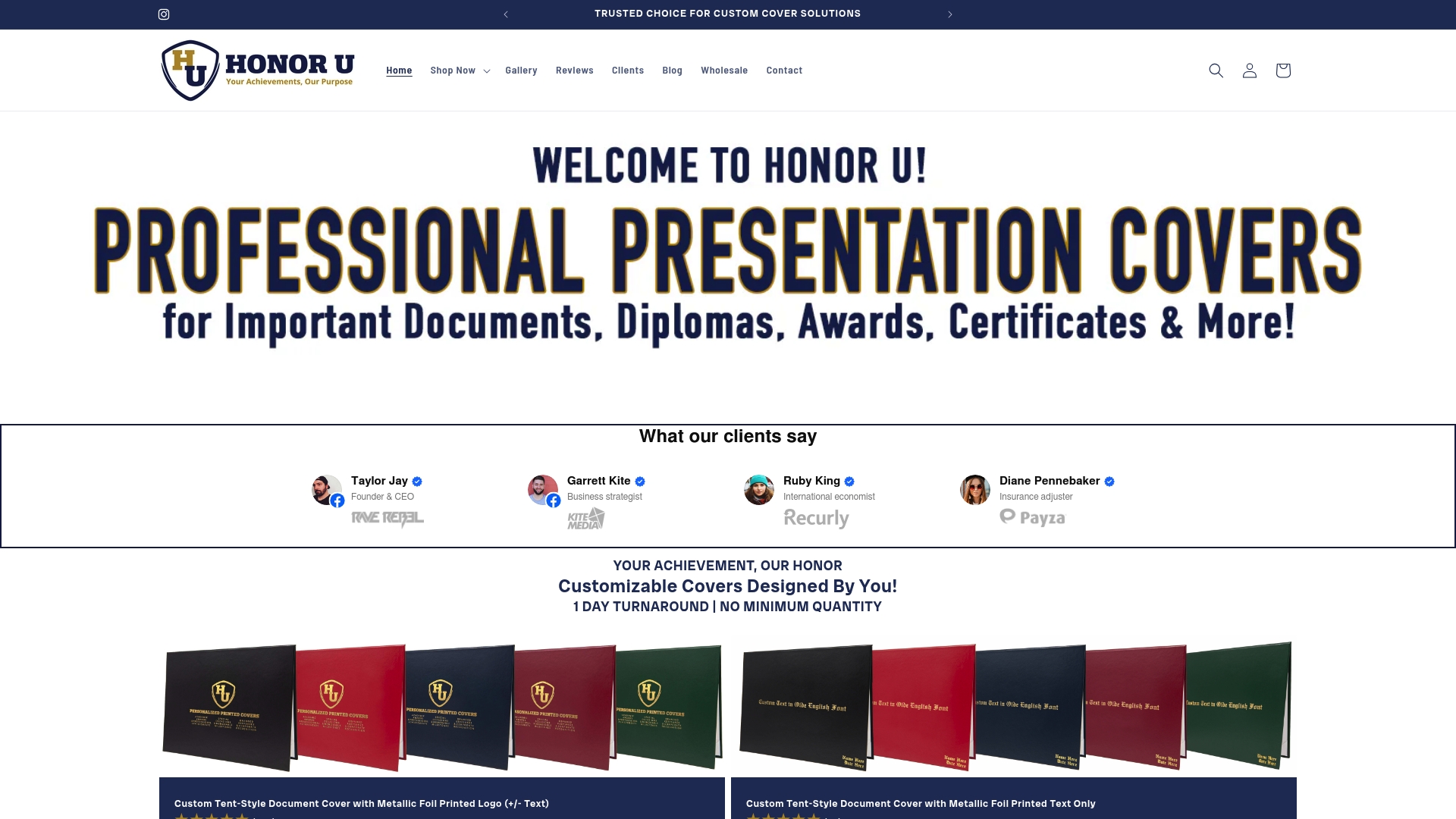
Personalization services add institutional logos, graduate names, and ceremony dates using premium metallic foil printing. Whether you need one cover for a special achievement or hundreds for graduation ceremonies, our no-minimum ordering policy ensures every accomplishment receives professional presentation. Graduation year tent-style covers commemorate specific class years with elegant designs trusted by educators nationwide.
Frequently asked questions
What materials are best for long-term diploma preservation?
Archival-quality leatherette or acid-free materials protect diplomas most effectively for decades. These materials resist chemical degradation that causes paper yellowing and ink fading. Standard paperboard covers offer basic protection but lack long-term preservation qualities necessary for credentials you’ll display 30 to 50 years.
How much lead time is needed to order custom certificate covers?
Plan for 3 to 4 weeks minimum lead time for custom printed covers. This timeline allows proper artwork review, proof approval, production, quality control, and shipping. Rush orders may be possible but increase error risk and limit opportunities to correct problems before delivery deadlines.
Can I use standard certificate holders for small or large orders?
Standard holders work excellently for both small and large quantities. They offer cost-effective protection, especially when ordering high volumes where per-unit pricing matters most. Standard options suit situations where generic presentation meets needs without requiring personalized branding or custom text.
How do I measure my diploma for a cover?
Measure your diploma’s exact width and height using a rigid ruler on a flat surface. Record the widest horizontal dimension and tallest vertical dimension. Verify measurements twice using different tools to catch errors. Round up to the nearest quarter inch for standard sizing, or provide exact dimensions for custom-fit covers.
Do personalized covers cost significantly more than standard options?
Personalized covers typically cost $10 to $30 more per unit than standard pre-printed versions. This premium pays for custom artwork setup, foil printing, and individual design execution. The investment creates keepsakes graduates value long-term, making the additional cost worthwhile for special recognition ceremonies and milestone achievements.
What information should I include on custom graduation covers?
Include institutional logos, graduate names, graduation dates, degree or certification types, and school mottos when space permits. Prioritize elements most meaningful to recipients and aligned with institutional branding. Avoid overcrowding designs, as clean layouts with strategic foil placement create more elegant, professional appearances than busy, text-heavy alternatives.
Recommended
- Graduation Gift Ideas: Meaningful Presents for the Class of 2026 and Beyond | Honor U
- Cover for Diploma: Complete Guide to Choosing and Customizing Diploma Covers | Honor U
- Diploma cover vs folder: Choose the best graduation holder | Honor U
- Creating a Memorable Graduation Ceremony with Diploma Covers | Honor U
More on certificate covers
What is included, and which size to order, live on the FAQ.
Taylor Pace writes Honor U guides. Blair Black reviews them. Honor U sells empty covers and holders.