
Key Features of Diploma Cases: A Buyer's Guide

TL;DR:
- A high-quality diploma case uses archival materials, UV-protective glazing, and precise sizing to safeguard documents long-term. Proper mounting methods, construction quality, and environment-specific features are essential for durability and presentation. Customization and accurate sizing elevate the case from functional to meaningful keepsake, ensuring lasting recognition of achievement.
A diploma case is defined by its construction with acid-free, archival materials, UV-protective glazing, precise sizing, and customization options that work together to safeguard and display your diploma with lasting dignity. Whether you are a recent graduate selecting your first display solution or a university procurement officer ordering in bulk, understanding the key features of diploma cases prevents costly mistakes and ensures your document survives decades without fading, yellowing, or physical damage. The industry term for the broader category is “diploma presentation cover” or “diploma frame,” and both terms describe products that range from simple leatherette folders to fully framed archival displays. This guide covers every decision point, from material science to personalization, so you can choose with confidence.
What archival materials and protective components are crucial in diploma cases?
Archival-safe diploma cases use acid-free, lignin-free matting and UV-filtering glazing to prevent the irreversible yellowing and fading that standard materials cause within just a few years. This distinction matters because lignin, a natural compound in wood pulp paper, breaks down over time and releases acids that migrate into adjacent materials, including your diploma. Choosing archival-grade components is not a luxury upgrade. It is the baseline for any case intended to last more than a decade.
UV protection: the most overlooked specification
Standard glass blocks only about 45% of UV rays, which is insufficient for long-term preservation of ink and paper. UV-protective acrylic that blocks 99% of UV rays is the recommended standard for diplomas displayed near windows or under fluorescent lighting. The practical implication is significant: a diploma hung in a sunlit office without proper glazing can show visible fading within two to three years, while the same document behind museum-grade acrylic remains pristine for decades.
Acrylic glazing weighs 50% less than glass and is shatter-resistant, making it the safer and more practical choice for larger diplomas or high-traffic environments like hospital corridors or school hallways. Glass, by contrast, offers superior optical clarity and scratch resistance, making it the preferred choice for executive offices where aesthetics take priority and the frame is rarely handled. Neither material is universally superior. The right choice depends on where the diploma will live.
Mounting methods and their long-term consequences
Using tape, glue, or staples directly on a diploma causes irreversible damage through staining, pressure marks, and tears. Archival corners made from polyester or Japanese paper hinges are the professional standard for reversible, non-damaging mounting. This matters especially for original diplomas, which cannot be reprinted by most institutions without a formal request and a fee.
Pro Tip: Ask any framer or case supplier whether their mounting method is “reversible.” If they cannot answer that question clearly, treat it as a red flag about their archival standards.
The table below compares common and archival materials across the features that matter most for long-term diploma preservation.
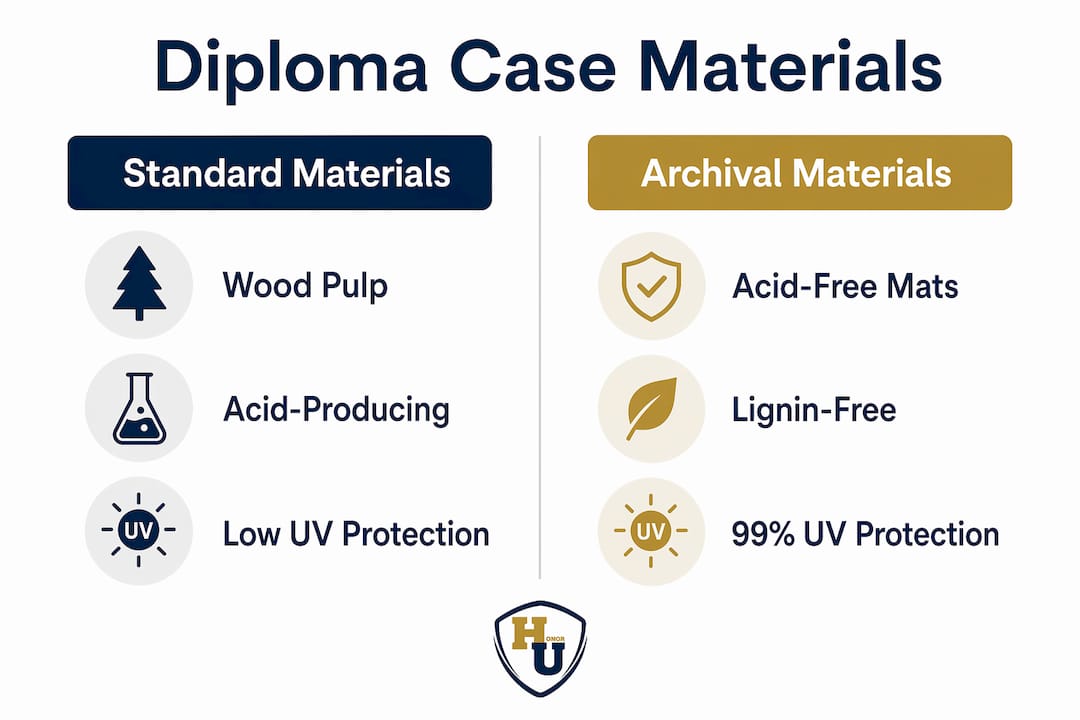
| Feature | Standard materials | Archival materials |
|---|---|---|
| Mat board | Wood pulp, acid-producing | Acid-free, lignin-free cotton rag |
| Glazing | Standard glass (45% UV block) | Museum acrylic (99% UV block) |
| Mounting | Tape or glue (permanent damage) | Archival corners or Japanese hinges |
| Backing | Cardboard (acidic) | Acid-free foam core or Coroplast |
| Lifespan | 3 to 5 years before visible damage | 50+ years with proper care |
Investing in archival materials may appear costly upfront, but professional custom framing costs around $200 once, compared to $40 store-bought frames that require replacement every three to five years due to material degradation. Over a twenty-year period, the archival option is both the more economical and more protective choice.
How do sizing and construction quality affect diploma case effectiveness?

Correct sizing is the single most fundamental construction requirement for any diploma case, because an ill-fitting case creates physical stress on the document that leads to bending, slipping, and corner damage over time. Most bachelor’s degrees measure 8.5 by 11 inches, while master’s and doctoral diplomas are often 11 by 14 inches, and many institutions issue non-standard sizes that fall outside these common dimensions. Ordering a case without first measuring the actual diploma is the most common and most preventable purchasing mistake.
Construction quality extends well beyond sizing. The following factors determine whether a diploma case holds up over years of display or handling.
- Frame material and joinery. Solid wood frames in mahogany, cherry, or walnut offer superior longevity and a traditional aesthetic suited to professional offices. Composite or MDF frames cost less but are more susceptible to warping in humid environments. The corner joinery method matters too: v-nail or spline joints hold better than simple staple construction under the stress of temperature and humidity changes.
- Backing board density. High-density foam core backing provides a stable, acid-free surface that keeps the diploma flat and prevents sagging. Thin cardboard backing, common in budget cases, compresses over time and allows the diploma to shift inside the frame.
- Rabbet depth. The rabbet is the interior channel that holds the glazing, mat, diploma, and backing in place. A shallow rabbet forces components together under pressure, which can cause glazing to crack or mat boards to bow. A properly engineered rabbet accommodates all layers with a small tolerance for expansion.
- Hardware quality. D-ring hangers, security screws, and wall bumpers on the back of a case indicate professional-grade construction. Sawtooth hangers and plastic tabs are signs of a consumer-grade product not designed for permanent display.
- Cover material durability. For presentation-style diploma covers rather than framed cases, the outer cover material determines both tactile quality and longevity. Leatherette over a rigid board core resists creasing and holds its shape through repeated handling, which matters for ceremony-day presentations where covers pass through many hands.
Learning how to select and customize the best diploma folder before placing an order saves time and prevents the frustration of receiving a product that does not fit or does not meet the display environment’s requirements. Institutions ordering in bulk for graduation ceremonies should request a physical sample before committing to a large quantity, specifically to verify sizing accuracy against their actual diploma dimensions.
What customization features enhance the value and presentation of diploma cases?
Customization transforms a diploma case from a functional container into a meaningful keepsake, and the specific techniques used determine both the visual impact and the durability of the personalization. The most common and most meaningful customization options follow a clear hierarchy from surface-level to deeply personal.
- Name and degree imprinting. Adding the graduate’s name, degree title, and graduation year to the cover or interior mat creates an immediate personal connection. This is the baseline customization that most buyers request, and it distinguishes a presentation piece from a generic folder.
- Foil stamping. Foil stamping uses metallic foil pressed onto the cover surface to create a shiny, reflective finish that reads as premium and formal. Gold and silver foil are the most requested colors, but copper, bronze, and holographic foil options are available from specialized suppliers. Foil stamping is particularly effective on leatherette covers because the contrast between the matte surface and the reflective foil is visually striking.
- Embossing. Embossing presses a raised design into the cover material without adding color or foil, producing a subtle, tactile effect that conveys understated elegance. Many institutions prefer embossed seals or crests because the result feels permanent and authoritative rather than decorative.
- Institutional logo and crest reproduction. Schools, universities, and corporate training departments frequently require their official seal or logo on the cover. This level of customization reinforces institutional identity and signals to the recipient that the document inside carries official weight.
- Material and color selection. Leatherette is the most widely used cover material because it is durable, affordable, and available in a broad range of colors. Bonded leather offers a more premium tactile experience and a richer appearance. Padded covers add cushioning beneath the leatherette, providing a plush feel and better protection against bumps during transport or ceremony-day handling. Color choices range from traditional navy, burgundy, and black to contemporary options like gray, forest green, and white for modern institutional branding.
For organizations ordering in bulk, consistent customization across all covers reinforces branding and creates a unified visual identity at graduation ceremonies or award events. Wehonoru’s metallic foil printing capability and no-minimum ordering policy make it practical for both a single graduate and a school district ordering five hundred covers to receive the same level of personalization at a price point that reflects the order size.
How to select the best diploma case based on environment and intended use
The display environment is the primary filter for every other decision in the selection process, because a case that performs well in a climate-controlled home office may fail quickly in a humid restaurant kitchen or a sun-facing reception area. Matching the case to its intended location prevents premature deterioration and reduces the need for replacement.
Consider these factors before finalizing your selection.
- Light exposure. Direct sunlight is the most damaging environmental factor for diplomas. Any case placed within six feet of a window should use UV-protective glazing rated at 99% UV filtration. Cases in interior rooms with only artificial lighting have more flexibility, though UV-filtering glazing remains the better long-term choice.
- Humidity and temperature. High humidity causes paper to expand and contract, which loosens mounting and warps backing boards over time. Cases displayed in bathrooms, kitchens, or basements should use moisture-resistant materials and sealed backing. Climate-controlled offices and living rooms present the least risk.
- Traffic and handling frequency. A diploma displayed in a high-traffic area like a hospital waiting room or a school hallway benefits from acrylic glazing over glass for shatter resistance. A case in a private home office can prioritize optical clarity with glass glazing.
- Décor compatibility. Wood frames in rich finishes like mahogany or cherry complement executive offices, while brushed metal or matte black frames suit minimalist modern interiors. The frame’s visual weight should complement the diploma, not compete with it for attention.
- Memorabilia inclusion. Graduates who want to display a tassel, honor cords, or medals alongside their diploma need a shadow box format. Shadow box frames offer one to two inches of depth to accommodate three-dimensional items without compression, and they use acid-free materials to safely mount memorabilia alongside the diploma.
Pro Tip: Before ordering, photograph the wall or surface where the diploma will hang, then compare the frame dimensions against the space. A frame that looks proportional in a product photo can appear undersized or oversized in its actual setting.
The decision between a ready-made case and a custom diploma case comes down to two variables: fit and identity. Ready-made cases work well for standard diploma sizes and neutral institutional settings. Custom cases are the right choice when the diploma is a non-standard size, when institutional branding is required, or when the case is intended as a lasting personal keepsake rather than a functional display solution. Wehonoru’s made-to-fit sizing capability addresses the non-standard size problem directly, producing covers for documents that fall outside the 8.5 by 11 and 11 by 14 inch standard ranges. You can also explore diploma frame style options that balance durability with visual appeal across different academic and professional environments.
Key takeaways
The most effective diploma case combines archival-grade materials, precise sizing, appropriate glazing, and meaningful customization to protect and honor the document for decades.
| Point | Details |
|---|---|
| Archival materials are non-negotiable | Acid-free mats and UV-filtering glazing prevent yellowing and fading over 10+ years. |
| Sizing accuracy prevents physical damage | Measure the actual diploma before ordering; most bachelor’s degrees are 8.5x11 inches, doctoral diplomas are often 11x14 inches. |
| Glazing choice depends on environment | Use 99% UV acrylic for sun-exposed locations; glass suits low-traffic, climate-controlled offices. |
| Customization adds lasting personal value | Foil stamping, embossing, and institutional logos transform a case into a meaningful keepsake. |
| Match the case to its display setting | Consider light exposure, humidity, traffic, and décor before selecting materials and frame style. |
Why the cheapest diploma case is always the most expensive choice
I have reviewed hundreds of diploma cases across price points, and the pattern is consistent: buyers who prioritize upfront cost over material quality end up replacing their cases within three to five years, often after noticing yellowed mats, faded ink, or warped backing. The math never favors the budget option when you factor in replacement costs and the irreplaceable nature of the original document.
The detail that most buyers overlook is mounting method. I have seen original diplomas permanently stained by adhesive tape applied by well-meaning framers who did not know better. Once that damage occurs, there is no reversal. The diploma is altered forever. This is why I always recommend asking for archival corners or Japanese paper hinges before agreeing to any mounting solution, regardless of the supplier’s reputation.
Customization is where I see the most meaningful return on investment. A leatherette cover with foil-stamped name and institution crest does not just look better than a plain folder. It communicates to the recipient that the achievement was recognized with intention and care. For institutions ordering in bulk, that signal matters enormously for morale and retention. For individuals, it creates an heirloom feel that a generic case simply cannot replicate.
My honest recommendation is to treat the diploma case as part of the achievement itself, not as an afterthought. Spend the time to measure correctly, select archival materials, and choose a customization level that reflects the significance of the document inside. The cases that people keep for thirty years are never the ones that cost the least.
— Manager
Protect and personalize your diploma with Wehonoru

Wehonoru’s Classic Diploma of Graduation tent-style cover delivers the combination of durable construction, elegant presentation, and meaningful personalization that this guide recommends. Each cover is produced with a one-business-day turnaround, no minimum order quantity, and metallic foil printing options that include institutional logos, graduate names, and degree titles. Whether you are a single graduate preparing for a ceremony or a university ordering covers for an entire graduating class, Wehonoru’s made-to-fit sizing and bulk pricing structure make professional presentation accessible at every scale. Explore the graduation document cover and configure your order with the exact dimensions, foil color, and personalization your diploma deserves.
Pair your diploma presentation with a custom graduation banner from PRINTDRILL to create a complete, coordinated display for ceremony day or a celebratory event.
FAQ
What materials should a quality diploma case use?
A quality diploma case uses acid-free, lignin-free mat board, UV-filtering glazing rated at 99% UV protection, and acid-free foam core backing. These archival materials prevent yellowing, fading, and physical deterioration over decades of display.
What size diploma case do I need?
Most bachelor’s degree diplomas measure 8.5 by 11 inches, while master’s and doctoral diplomas are commonly 11 by 14 inches. Always measure your actual diploma before ordering, since many institutions issue non-standard sizes that fall outside these common dimensions.
What is the difference between foil stamping and embossing on a diploma case?
Foil stamping applies metallic foil to the cover surface for a shiny, reflective finish, while embossing presses a raised design into the material without color or foil for a subtle, tactile effect. Both methods are durable and professional, but foil stamping is more visually prominent and embossing reads as more understated.
Should I choose glass or acrylic glazing for my diploma case?
Acrylic glazing is lighter, shatter-resistant, and blocks up to 99% of UV rays, making it the better choice for high-traffic areas or sun-exposed locations. Glass offers superior optical clarity and scratch resistance, which suits low-traffic, climate-controlled settings like private offices.
Can I display a tassel or honor cords alongside my diploma?
Yes, but you need a shadow box format with one to two inches of interior depth to accommodate three-dimensional items without compression. Shadow boxes designed for diploma display use acid-free materials to safely mount tassels, medals, and cords alongside the document.