
Customized Diploma Cover: Your Complete Ordering Guide

TL;DR:
- A customized diploma cover is more than a protective sleeve; it serves as a lasting keepsake, reflecting pride and achievement. Proper selection of materials, sizes, and personalization ensures a polished presentation, whether for individual or institutional orders. Planning ahead and verifying specifications help deliver a meaningful ceremony experience and long-term preservation.
A customized diploma cover is far more than a protective sleeve. It is the first thing a graduate touches when their name is called, the object their family photographs from the crowd, and often the item that sits on a shelf for decades afterward. Yet most students, educators, and event organizers treat cover selection as an afterthought. This guide changes that. You will find practical guidance on materials, sizes, personalization techniques, ordering timelines, and archival preservation, everything you need to order with confidence and deliver a custom diploma presentation that genuinely honors the achievement it contains.
Table of Contents
- Key Takeaways
- Customized diploma cover: materials, sizes, and styles
- Customization techniques and personalization options
- How to prepare and order efficiently
- Preserving diploma covers for long-term protection
- My perspective on getting diploma covers right
- How Wehonoru delivers on every one of these standards
- FAQ
Key Takeaways
| Point | Details |
|---|---|
| Lock down specs first | Confirm exact diploma dimensions, quantity, material, color, and artwork before requesting any quote. |
| Proof before printing | Always review and approve a digital proof to catch typos or logo alignment issues before production begins. |
| Plan backward from your event | Build your order timeline back from the ceremony date to allow for proofing, production, and shipping. |
| Match material to purpose | Choose archival-grade materials for long-term preservation and durable presentation covers for ceremony use. |
| Personalization adds lasting value | Foil-stamped logos, degree titles, and graduation years transform a cover into a keepsake with heirloom feel. |
Customized diploma cover: materials, sizes, and styles
The foundation of any quality cover order is understanding what the cover is made of, how large it needs to be, and which opening style fits your document. Getting these three elements right before you contact a supplier saves time, avoids reprints, and produces a finished product that looks deliberate rather than generic.
Material choices and their differences
The three most common materials for a customized diploma cover are leatherette, vinyl, and rigid board stock. Leatherette is a synthetic material with a textured surface that mimics genuine leather closely enough to read as premium in photographs and in person. It holds foil stamping well, resists minor scuffs, and gives the finished cover an heirloom feel that graduates and families associate with prestige. Vinyl is smoother, less expensive, and equally durable for everyday handling. It suits institutions that need consistent results across large orders without a significant per-unit cost increase. Rigid board stock, sometimes laminated with a matte or gloss finish, provides the stiffest protection and works well when the cover will also serve as a display piece.
Padded diploma covers with light foam protect documents significantly better than simple paper folders on ceremony day, which matters when hundreds of graduates are handling covers during a long outdoor processional.
| Material | Appearance | Durability | Foil Suitability |
|---|---|---|---|
| Leatherette | Textured, premium feel | High | Excellent |
| Vinyl | Smooth, clean finish | High | Very good |
| Rigid board | Structured, formal | Very high | Good |
| Padded leatherette | Plush, protective | Highest | Excellent |
| Paper/cardstock | Lightweight, simple | Low | Fair |
Size and style considerations
Typical U.S. diploma sizes include 8.5×11 inches and 11×14 inches, and suppliers require you to confirm exact dimensions before production. A cover that is even a quarter-inch too small will crease the document during insertion. The general rule is to order a cover with interior dimensions slightly larger than the diploma itself, allowing the document to slide in and out without stress on the paper.
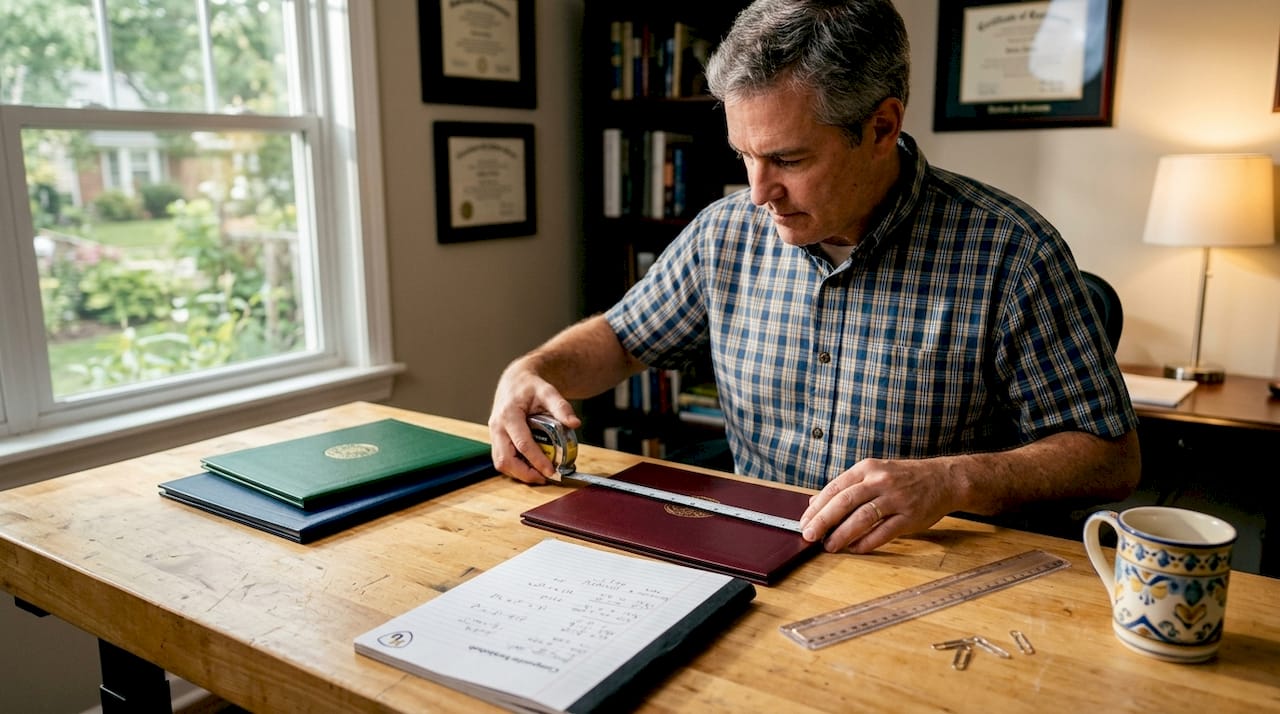
Style refers to how the cover opens. Tent-style covers (also called portrait-style) open from the front like a greeting card, with the diploma displayed vertically. Book-style covers open from the right side, displaying the document horizontally. Tent-style is the more common choice for graduation ceremonies because it photographs well and sits naturally on a table or shelf. Book-style suits landscape-format documents such as some professional certifications and legal credentials.
Pro Tip: If your institution issues non-standard diploma sizes, look for suppliers that offer made-to-fit custom dimensions rather than forcing your document into a standard template. This is one of the details that separates a polished ceremony from one that looks improvised.
Customization techniques and personalization options
Choosing a unique certificate cover material is only the first step. What transforms that cover into something meaningful is the personalization applied to its surface. Two production techniques dominate the field: foil stamping and embossing.
Foil stamping uses a heated die to press metallic foil onto the cover surface, creating a traditional, prestigious look with reflective gold, silver, or colored metallic finishes. Embossing presses a design into the material without foil, creating a subtle three-dimensional impression that reads as refined and understated. Foil stamping is the more visible choice at a distance, making it ideal for ceremony photography and stage presentation. Embossing works beautifully on covers intended for personal keepsake use, where the texture rewards close inspection.
What you can personalize
Customization often includes institutional logos, graduate names, degree titles, honors designations, and graduation years. These elements can be applied individually or in combination, depending on your supplier’s capabilities and your budget. For institutions ordering bespoke diploma sleeves in volume, consistent branding across every cover reinforces school identity and creates a cohesive visual experience during the ceremony.
The list of personalization options available from most quality suppliers includes:
- Institutional seal or crest in foil
- School name and department
- Degree or certificate title
- Graduate’s full name
- Graduation year or class designation
- Custom color selection tied to school colors or regalia
- Interior lining color or printed message
Matching cover colors to school colors and tassels creates a cohesive graduation aesthetic that reinforces school identity and complements academic regalia. This is a detail that photographs exceptionally well and one that graduates notice and appreciate. A navy cover with gold foil for a school whose colors are navy and gold is not coincidence. It is considered design, and it communicates pride.
Pro Tip: Always provide high-resolution vector artwork (SVG or EPS format) for your institutional logo. Raster images supplied at low resolution produce blurry foil impressions that undermine the prestige the cover is meant to convey. Most print suppliers will flag this, but catching it before you submit saves a round of revisions.
For individuals ordering a single personalized cover as a graduation gift, many suppliers now accept orders for a single unit with full customization. This makes a custom diploma presentation accessible even without a bulk purchase, which is a meaningful shift from the old minimum-order model that once locked out individual buyers.
You can learn more about personalizing covers with branding and recipient details in Wehonoru’s dedicated resource on this topic.
How to prepare and order efficiently
Ordering a customized diploma cover for a single graduate is straightforward. Ordering five hundred of them for a university commencement is an operations project that requires the same discipline you would apply to any time-sensitive institutional task.
Locking down quantity, exact diploma dimensions, material, color, and artwork upfront is the highest-leverage step before placing any order. Suppliers cannot produce an accurate quote without this information, and submitting incomplete specifications is the single most common cause of delays. Treat this as your pre-flight checklist.
The ordering checklist
Work through these steps in sequence before submitting your order:
- Measure the actual diploma, not the paper size listed on a specification sheet. Diploma dimensions sometimes differ from standard paper sizes due to border printing or decorative margins.
- Confirm your quantity, including a modest overage of three to five percent for damage, reprints, or late additions to the graduate list.
- Select material, color, and style based on ceremony context, budget, and how the cover will be used after the event.
- Prepare your artwork files in vector format at the correct resolution and color profile. Submit these with your initial inquiry, not as an afterthought.
- Request a digital proof before production begins. Digital proofing catches errors like typos or logo misalignment before they become expensive corrections.
- Approve the proof promptly so production can begin on schedule. Delays in proof approval are the most common reason orders miss ceremony dates.
- Confirm shipping timelines and build in buffer time for transit variability, especially for large institutional orders.
Planning orders backward from ceremony dates with built-in buffer time prevents stress from production and shipping delays. Proofing and production can take several weeks for large volume orders, so the earlier you begin, the more options you retain if something needs correction.
Pro Tip: If your institution holds diploma pickup events, coordinate with your registrar’s office on logistics before the covers arrive. Diploma pickup coordination often requires ID verification and scheduled time slots, and having the covers organized by last name or student ID in advance turns a chaotic event into a smooth one.
For institutions new to this process, reviewing a step-by-step ordering guide can clarify the full workflow and reduce uncertainty at each stage.
Preserving diploma covers for long-term protection
There is an important distinction that most buyers overlook: a cover designed for ceremony presentation and a cover designed for archival storage are not always the same product. Understanding this difference protects both the cover and the diploma inside it.
Presentation covers versus archival storage
Ceremony covers prioritize appearance, durability during handling, and visual impact. They are built to withstand a graduate gripping them while shaking hands, being photographed under bright lights, and traveling home in a backpack. Archival covers prioritize chemical stability. They are designed to protect the document from deterioration over decades, which requires a different set of material standards.
Archival-quality materials are acid-free, lignin-free, and buffered to neutralize ambient acidity. These properties matter because paper diplomas are vulnerable to the acids present in standard folders and even in the air. A diploma stored for thirty years in a non-archival cover may yellow, become brittle, or show foxing spots where the cover material has transferred acidity to the document surface.
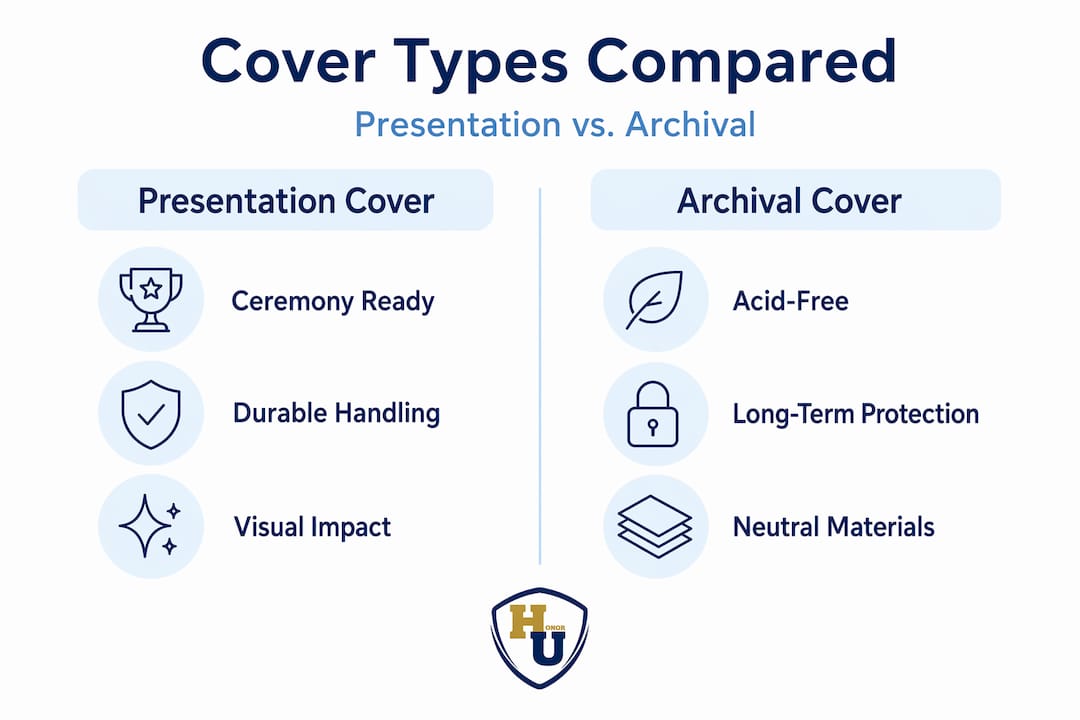
The table below outlines the key differences between presentation and archival covers:
| Feature | Presentation cover | Archival cover |
|---|---|---|
| Primary purpose | Ceremony display | Long-term document preservation |
| Material standard | Durable, aesthetic | Acid-free, lignin-free, buffered |
| Foil stamping | Yes | Limited (depends on supplier) |
| Padded protection | Common | Less common |
| Typical lifespan | 5 to 15 years | 50 to 100+ years |
| Best use | Ceremony day, display | Long-term storage, archival filing |
Best practices for handling and storing covers
Follow these guidelines to extend the life of both the cover and the diploma it protects:
- Store covers flat or vertically in a stable, climate-controlled environment. Avoid attics, garages, and basements where temperature and humidity fluctuate.
- Keep covers away from direct sunlight, which fades foil and degrades most cover materials over time.
- Place acid-free tissue between the diploma and the interior cover surface if using a presentation-grade cover for long-term storage.
- Handle covers with clean, dry hands. Oils and moisture from fingers accelerate material degradation at contact points.
- Consider purchasing a separate archival-grade folder for permanent storage and using the presentation cover for display or framing purposes.
Pro Tip: Separating covers for ceremony use from those for archival storage is a practice most individuals and institutions skip entirely. It costs very little to add a quality archival sleeve to a bulk order, and it protects documents that may be legally or personally significant for the rest of a graduate’s life.
My perspective on getting diploma covers right
I have seen well-intentioned graduation organizers spend weeks selecting graduation gowns and regalia, then place a diploma cover order three days before the ceremony with no artwork ready and no confirmed dimensions. The result is rarely catastrophic, but it is always stressful, and the covers that arrive under those conditions are rarely as good as they could have been.
What I have learned from years of working with educational institutions and event planners is that the covers that create genuine pride during a ceremony are never accidental. They are the product of someone deciding, weeks in advance, that the cover matters. Choosing a leatherette finish that matches the school’s visual identity. Specifying gold foil because it photographs well under gymnasium lighting. Getting a proof approved with enough time to correct a misaligned crest. These are small decisions individually. Collectively, they produce a ceremony moment that graduates remember.
I have also seen the opposite: institutions that invest in premium regalia but use a generic black cardstock cover that looks like it came from an office supply store. Graduates notice. Families photograph the cover. The disconnect between the gravity of the ceremony and the quality of the cover is visible in every photo taken that day.
My honest recommendation is to treat the diploma cover as part of the ceremony’s branding, not as packaging. Budget for it accordingly, plan for it with the same lead time you give to regalia, and communicate clearly with your supplier about what the cover needs to accomplish. Whether you are ordering one cover for a homeschool graduation or five hundred for a university commencement, the standard of care should be the same. A diploma represents years of work. The cover that holds it on the most important day of that journey deserves to reflect that significance.
, Manager
How Wehonoru delivers on every one of these standards
At Wehonoru, the entire product line is built around the principle that every achievement deserves professional presentation, regardless of order size or deadline pressure.
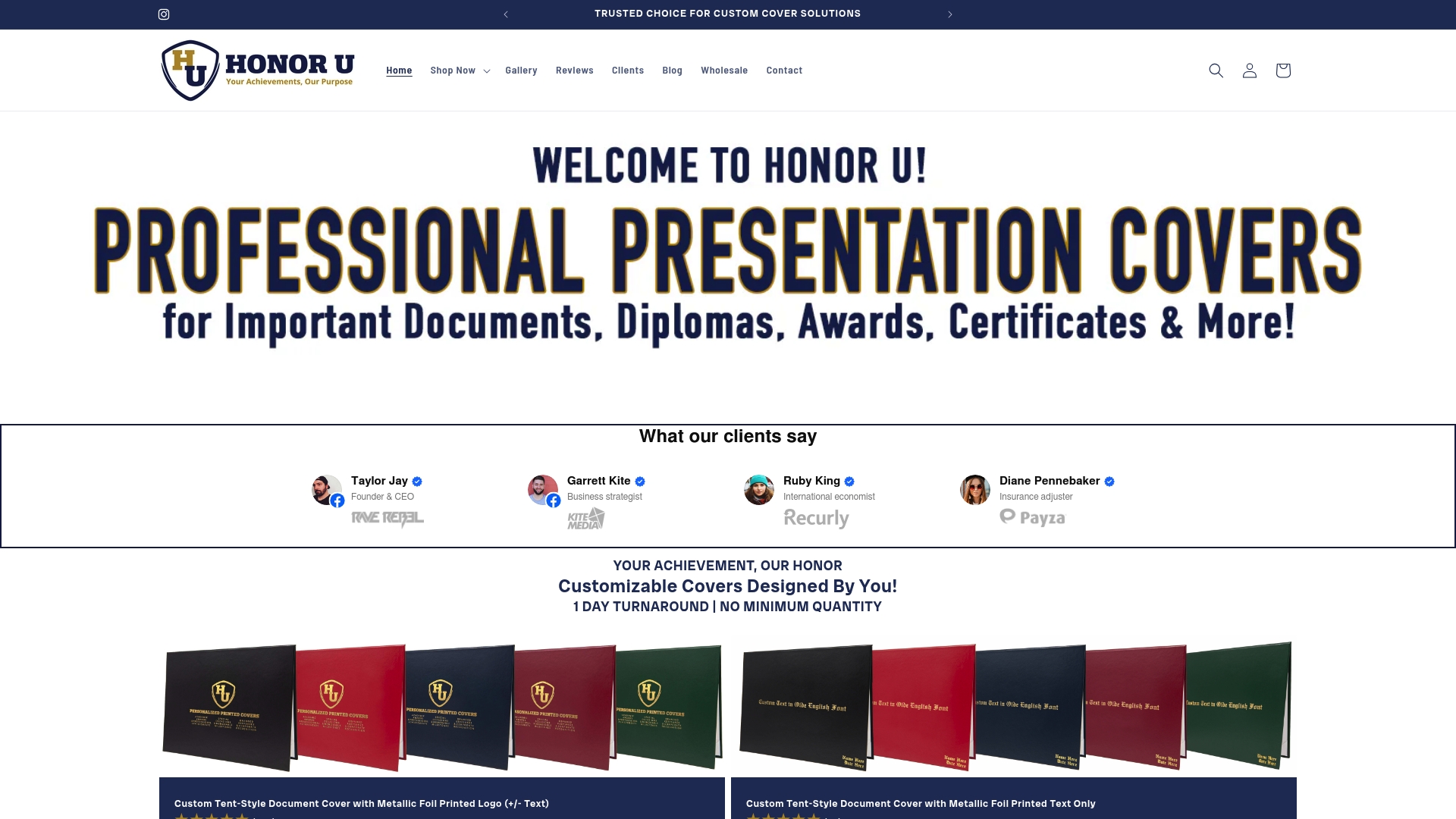
The customizable diploma and certificate covers at Wehonoru include tent-style and book-style options in multiple materials, sizes, and foil colors, with no minimum order quantity and no setup fees. Whether you need a single personalized cover for a family member’s graduation or three hundred branded covers for a university ceremony, the ordering process is the same: choose your specs, upload your artwork, approve your digital proof, and receive production-ready covers the next business day. The classic tent-style diploma cover is one of the most popular options for formal ceremonies, offering a clean, prestigious presentation in leatherette with metallic foil imprinting. For high school ceremonies specifically, the high school diploma cover is tailored to standard diploma dimensions with the same quality standards. Wehonoru ships free on orders over $30 and produces every order within one business day, making it the reliable choice for institutions that cannot afford to wait.
FAQ
What is a customized diploma cover?
A customized diploma cover is a protective presentation folder personalized with institutional branding, foil-stamped logos, graduate names, or graduation years. It serves both as a ceremony presentation piece and as a keepsake holder for the diploma.
What sizes are standard for diploma covers?
The most common U.S. diploma cover sizes are 8.5×11 inches and 11×14 inches. Covers should have interior dimensions slightly larger than the actual diploma to allow easy insertion without damage.
What is the difference between foil stamping and embossing?
Foil stamping presses metallic foil onto the cover surface using heat and a die, creating a reflective, traditional finish. Embossing creates a raised three-dimensional impression in the material without added foil, producing a more subtle effect.
How far in advance should I order customized diploma covers?
Planning backward from your ceremony date is the most reliable approach. Allow time for proof review, any corrections, production, and shipping, which can collectively span several weeks for large institutional orders.
Can I order a single customized cover without a bulk minimum?
Yes. Suppliers like Wehonoru accept orders for a single unit with full customization, including foil-stamped logos and personalized graduate details, with no minimum order requirements.
Recommended
More on sizes
The size chart and Made-to-Fit answers stay on the FAQ.
Taylor Pace writes Honor U guides. Blair Black reviews them. Honor U sells empty covers and holders.