
Custom Size Certificate Cover: Definition and Sizing Guide

TL;DR:
- A custom size certificate cover is a precisely tailored holder that fits a specific certificate’s dimensions to ensure optimal protection and presentation. Dimensions such as 6"x8", 8.5"x11", and 11"x14" are standard, but exact measurements and orientation must be confirmed for non-standard documents. Proper sizing ensures a snug fit that enhances both the document’s durability and the conveying of institutional prestige.
A custom size certificate cover is defined as a protective, personalized holder precisely tailored to fit a certificate’s exact dimensions, delivering both professional presentation and reliable document protection. In the industry, this product is also called a custom certificate holder or made-to-fit document cover. The definition of custom size certificate cover centers on one non-negotiable principle: the cover must snugly fit the document it holds, neither too tight to risk bent edges nor too loose to allow the certificate to shift. Standard dimensions like 6"x8", 8.5"x11", and 11"x14" represent the most common sizing benchmarks, but organizations with non-standard documents require covers built precisely to their specifications. Wehonoru specializes in exactly this capability, producing made-to-fit covers in leatherette and other premium materials with metallic foil personalization for schools, corporations, healthcare organizations, and individuals who refuse to let an ill-fitting cover diminish a hard-earned credential.
What are the common sizes and orientations for custom certificate covers?
Standard certificate sizes in the United States follow three primary benchmarks, each aligned with a distinct document type and presentation context. Understanding these dimensions is the first practical step toward selecting or ordering the right cover.
The three most widely used sizes are:
- 6" x 8": Certificates of completion, junior achievement awards, and short-course credentials. This compact size suits youth programs, fitness studios, and community organizations.
- 8.5" x 11": High school diplomas, undergraduate degrees, and most corporate training certificates. This is the most common size in U.S. academic and professional settings.
- 11" x 14": Advanced degrees, formal commendations, and military honors. This larger format commands a more authoritative visual presence and is standard for graduate-level credentials.
Beyond dimensions, orientation determines how the cover opens and how the certificate reads when displayed. Portrait covers open upward like a tent and suit vertically printed certificates, which is why the tent-style format is the dominant choice for graduation diplomas. Landscape covers open like a book and work best for horizontally formatted documents, such as certain corporate awards or government commendations. Choosing the wrong orientation produces a cover that technically fits the paper but presents the document sideways or upside down, which defeats the purpose of a premium holder entirely.
Size and orientation together define the visual weight and formality of the presentation. A correctly sized portrait cover in leatherette with gold foil stamping communicates institutional prestige in a way that a generic off-the-shelf folder never can. Organizations ordering covers for ceremonies should confirm both dimensions and orientation before placing any order.
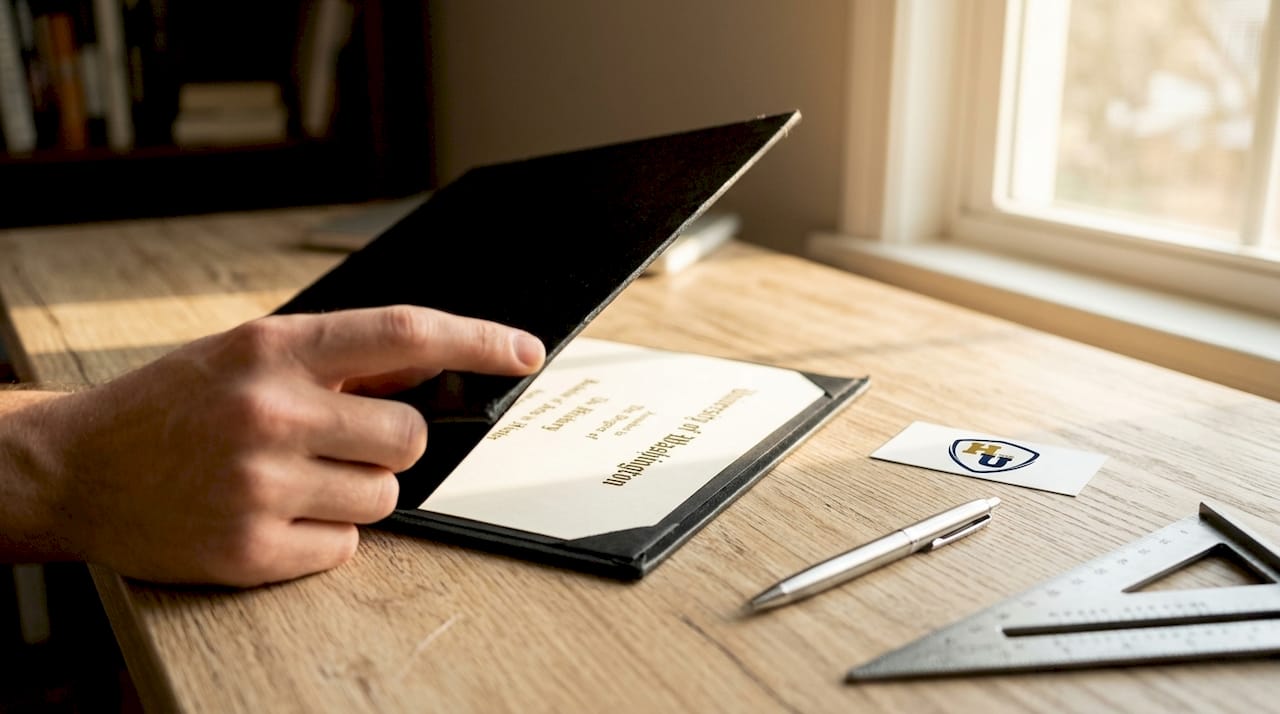
Pro Tip: Always measure the actual printed certificate, not the paper stock it was printed on. Certificates are sometimes printed on paper that is trimmed or bordered, meaning the visual document area differs from the full sheet size. Ordering a cover slightly larger than the certificate’s measured dimensions prevents forced insertion and protects edges during handling.
How does choosing the right custom size certificate cover enhance document protection and presentation?
The fit of a certificate cover directly determines whether the document inside survives years of handling or arrives at a ceremony already creased. An ill-fitting cover diminishes presentation quality in two distinct ways: a cover that is too large allows the certificate to shift freely, creating a visually sloppy appearance where the document “swims” inside the holder. A cover that is too small forces the certificate into a compressed space, bending corners and potentially tearing edges during insertion or removal.
“Proper size ensures a snug, secure fit likened to a well-tailored suit, crucial for professional appearance.” — Gradshop
This analogy is precise and instructive. A well-tailored suit does not gap at the shoulders or bind at the chest. A well-fitted certificate cover holds the document flat, centered, and protected without stress on any edge. The practical implication for schools, HR departments, and award coordinators is clear: sizing is not a secondary consideration. It is the foundation of presentation quality.
Smooth leatherette accounts for 90% of buyers in the custom certificate cover market, and the reason is straightforward. Leatherette combines a professional aesthetic with genuine durability, resisting surface scuffs and maintaining its structure through repeated handling. When the material is correctly matched to the cover’s dimensions, the result is a holder that protects the certificate from humidity, light abrasion, and the physical stress of being passed between hands at a ceremony.
Presentation quality matters beyond aesthetics. In academic settings, the moment a graduate receives a diploma cover is a public, often photographed event. In corporate environments, a recognition award presented in a premium, correctly fitted cover signals that the organization values the achievement. Healthcare providers who display board certifications in patient-facing areas rely on covers that hold credentials flat and legible for years. In every context, a cover that fits correctly is a cover that performs its function with dignity.
What customization options are available beyond size in custom certificate covers?
Size is the structural foundation of a custom certificate cover, but personalization is what transforms a functional holder into a meaningful keepsake. Customization options include embossed logos, foil stamping, personalized text, and interior designs like padded linings, each of which adds a distinct layer of identity and value to the finished product.
The most impactful customization choices fall into four categories:
- Exterior finish and material: Smooth leatherette in black, navy, burgundy, forest green, or gray provides the base. Faux leather and textured covers offer additional tactile options for organizations seeking a distinctive feel.
- Foil stamping and embossing: Metallic foil in gold, silver, or copper applied to logos, institutional names, or graduation years creates a permanent, high-contrast mark that reads as authoritative and premium.
- Text personalization: School names, organization titles, program designations, and years can be printed or foiled directly onto the cover exterior. Pre-phrased options like “Diploma of Graduation” or “Certificate of Achievement” are available for organizations that want a polished result without custom design work.
- Interior design: Padded linings protect the certificate surface from abrasion. Satin or velvet interior panels add an heirloom feel that elevates the unboxing or presentation moment.
The relationship between personalization and size is worth noting explicitly. A foil-stamped logo positioned on a cover that is the wrong size will appear off-center or disproportionate. Interior padding that is too thick for a slim cover will force the document to bow. Customization decisions must be made in conjunction with sizing, not after it.
The following table summarizes the primary customization types and their practical impact:
| Customization type | Material or method | Primary impact |
|---|---|---|
| Foil stamping | Gold, silver, copper metallic foil | Institutional branding and prestige |
| Logo embossing | Debossed or raised impression | Tactile identity without color |
| Text personalization | Foil or print on exterior | Program, year, and organization identity |
| Interior lining | Padded, satin, or velvet panel | Document protection and heirloom presentation |
| Material selection | Leatherette, faux leather, textured stock | Durability, color range, and surface quality |
Wehonoru offers all of these options with a 1-business-day production turnaround, which means organizations do not have to choose between speed and personalization. A fully customized cover with foil-stamped logo and padded interior ships the next day, a capability that most traditional suppliers cannot match.
How to measure and order a custom size certificate cover correctly?
Ordering a correctly sized cover requires a short but precise process. Skipping any step introduces the risk of a cover that looks wrong, fits poorly, or arrives too late to be useful. The checklist approach to measuring and ordering reduces sizing mistakes and improves satisfaction with the final product.
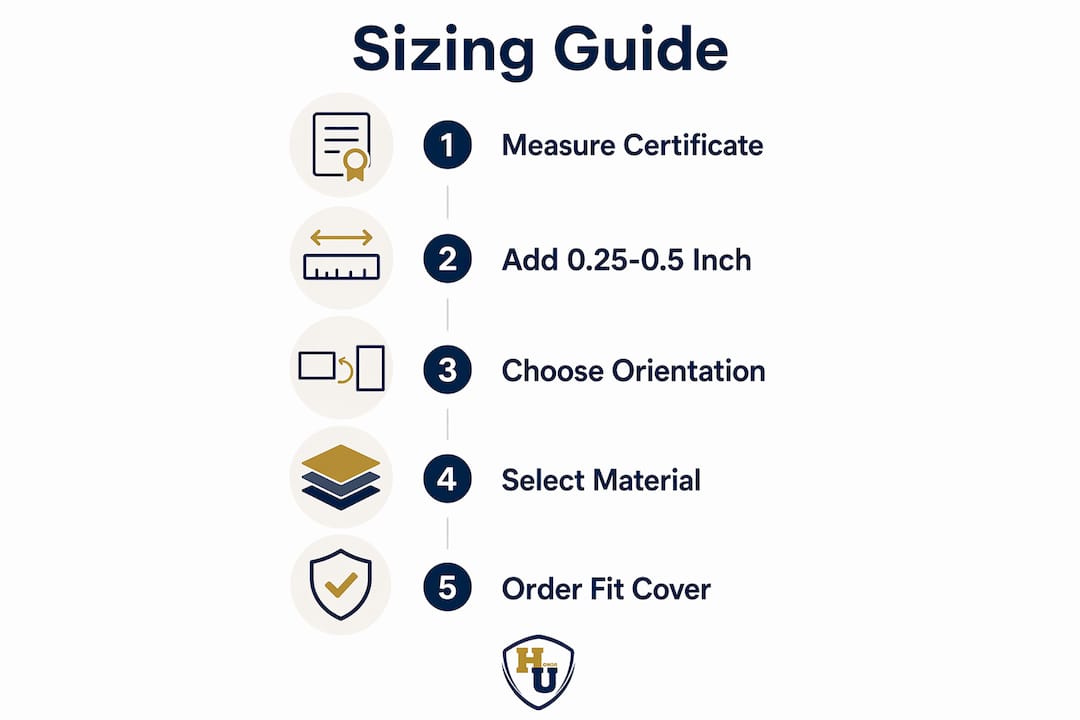
Follow these five steps in order:
- Measure the actual certificate dimensions. Use a ruler or measuring tape to record the width and height of the printed certificate, not the paper it was printed on. Record measurements to the nearest eighth of an inch.
- Determine the required orientation. Identify whether the certificate reads vertically (portrait) or horizontally (landscape). This determines whether you need a tent-style cover that opens upward or a book-style cover that opens to the side.
- Add a sizing margin. Add one-quarter to one-half inch to both the width and height measurements. This margin allows the certificate to slide in and out without resistance and prevents edge damage during repeated handling.
- Select material and personalization options. Choose exterior material, foil color, and any text or logo elements. Confirm that interior dimensions accommodate any padding or lining you have selected, since thick linings reduce the usable interior space by a small but measurable amount.
- Verify specifications with the vendor before finalizing the order. Reputable suppliers like Wehonoru confirm custom dimensions before production begins. This step catches transcription errors and ensures the cover matches the certificate it was designed to hold.
Pro Tip: If you are ordering covers for a ceremony and the certificates have not yet been printed, request a proof or sample certificate from your printer first. Measuring a proof prevents the costly scenario of receiving covers that do not fit the final printed documents.
The ordering process for non-standard sizes follows the same five steps, with one addition: confirm that the vendor has the production capability to manufacture covers outside standard dimensions. Many suppliers work from fixed templates and cannot accommodate unusual aspect ratios. Wehonoru’s made-to-fit capability covers non-standard dimensions without setup fees or minimum order requirements, which makes it practical for organizations with one unusual document or one hundred.
What are the most common types of certificate covers and how do they compare?
The term “certificate cover” encompasses several distinct product types, and the differences between them affect protection level, presentation style, cost, and the practical question of which documents they can hold. Understanding these distinctions helps organizations and individuals select the right format for their specific context.
Certificate folders differ from covers in structure and purpose. Folders typically include interior pockets and can hold multiple documents simultaneously, making them useful for presentation packets that include a certificate alongside a letter, transcript, or program. Covers are simpler, single-document holders designed for a precise, tailored fit around one certificate. The cover format prioritizes protection and visual focus on the single credential; the folder format prioritizes versatility and capacity.
The table below compares the four most common certificate cover types across the dimensions that matter most for purchasing decisions:
| Cover type | Orientation | Protection level | Best use case | Relative cost |
|---|---|---|---|---|
| Tent-style cover | Portrait | High (snug fit) | Graduation diplomas, academic awards | Moderate |
| Book-style cover | Landscape | High (snug fit) | Corporate awards, government commendations | Moderate |
| Certificate folder | Portrait or landscape | Moderate (pockets) | Multi-document presentations | Low to moderate |
| Padded presentation case | Portrait or landscape | Very high | Heirloom display, military honors | Higher |
Tent-style covers are the most widely used format in academic settings because most diplomas and graduation certificates are printed in portrait orientation. The tent-style design also allows the cover to stand upright on a desk or shelf, which adds display value beyond the ceremony moment. Wehonoru’s tent-style covers are available in five colors with metallic foil options, and the custom sizing capability means the format works equally well for a 6"x8" junior award and an 11"x14" doctoral degree.
Custom sizing integrates with all of these types. A padded presentation case built to a non-standard military commendation size, a book-style cover tailored to an unusually wide corporate award, or a tent-style cover sized for a trade school completion certificate each require the same precise measurement process described in the previous section. The cover type determines the structure; the custom dimensions determine the fit.
Key takeaways
A custom size certificate cover is defined by precise dimensional fit, and that fit is the single most important factor in both document protection and presentation quality.
| Point | Details |
|---|---|
| Definition centers on fit | A custom size certificate cover is a tailored holder sized to match specific certificate dimensions exactly. |
| Standard sizes anchor most orders | 6"x8", 8.5"x11", and 11"x14" cover the majority of U.S. academic and professional certificates. |
| Orientation is as critical as size | Portrait (tent-style) and landscape (book-style) must match the certificate’s printed layout to present correctly. |
| Add a sizing margin when ordering | A quarter to half-inch margin beyond measured dimensions prevents edge damage and allows smooth insertion. |
| Customization must align with sizing | Foil placement, interior padding, and material selection all interact with cover dimensions and must be specified together. |
Why sizing precision is the detail most organizations overlook
From my experience working with schools, HR teams, and award coordinators across a wide range of industries, the most consistent mistake I see is treating size as an afterthought. Organizations spend considerable time selecting foil colors, debating logo placement, and choosing between leatherette finishes, then order a cover in the nearest standard size without actually measuring the certificate. The result is a beautifully personalized cover that fits poorly, and a presentation moment that falls short of the effort invested.
The issue is compounded when organizations order in bulk for ceremonies. A single incorrect size measurement, applied across 200 covers, produces 200 ill-fitting holders. Correcting that error after production is expensive and time-consuming, and it is entirely preventable with a five-minute measurement step before the order is placed.
What I find equally underappreciated is the relationship between interior padding and usable space. A cover with a thick padded lining has a smaller effective interior than its exterior dimensions suggest. Organizations that select a padded option without accounting for this reduction sometimes find that a certificate sized to fit the cover’s exterior dimensions cannot actually be inserted without force. The solution is simple: specify the certificate dimensions to the vendor and let them calculate the correct exterior cover size. That is precisely what Wehonoru’s ordering process is designed to do.
My honest recommendation is to treat the sizing step with the same rigor you apply to the personalization step. Measure twice, confirm orientation, add the margin, and verify with the vendor. A cover that fits correctly honors the credential inside it. A cover that does not fit, regardless of how elegant its foil stamping may be, communicates carelessness at the moment that matters most.
— Manager
Find the right cover for your certificate at Wehonoru
Wehonoru produces custom certificate covers and diploma holders in made-to-fit dimensions, with no minimum order quantity and a 1-business-day production turnaround. Whether you need a single tent-style cover for a homeschool graduate or 500 foil-stamped holders for a corporate recognition program, the process starts with your certificate’s exact measurements and ends with a cover that fits with precision.
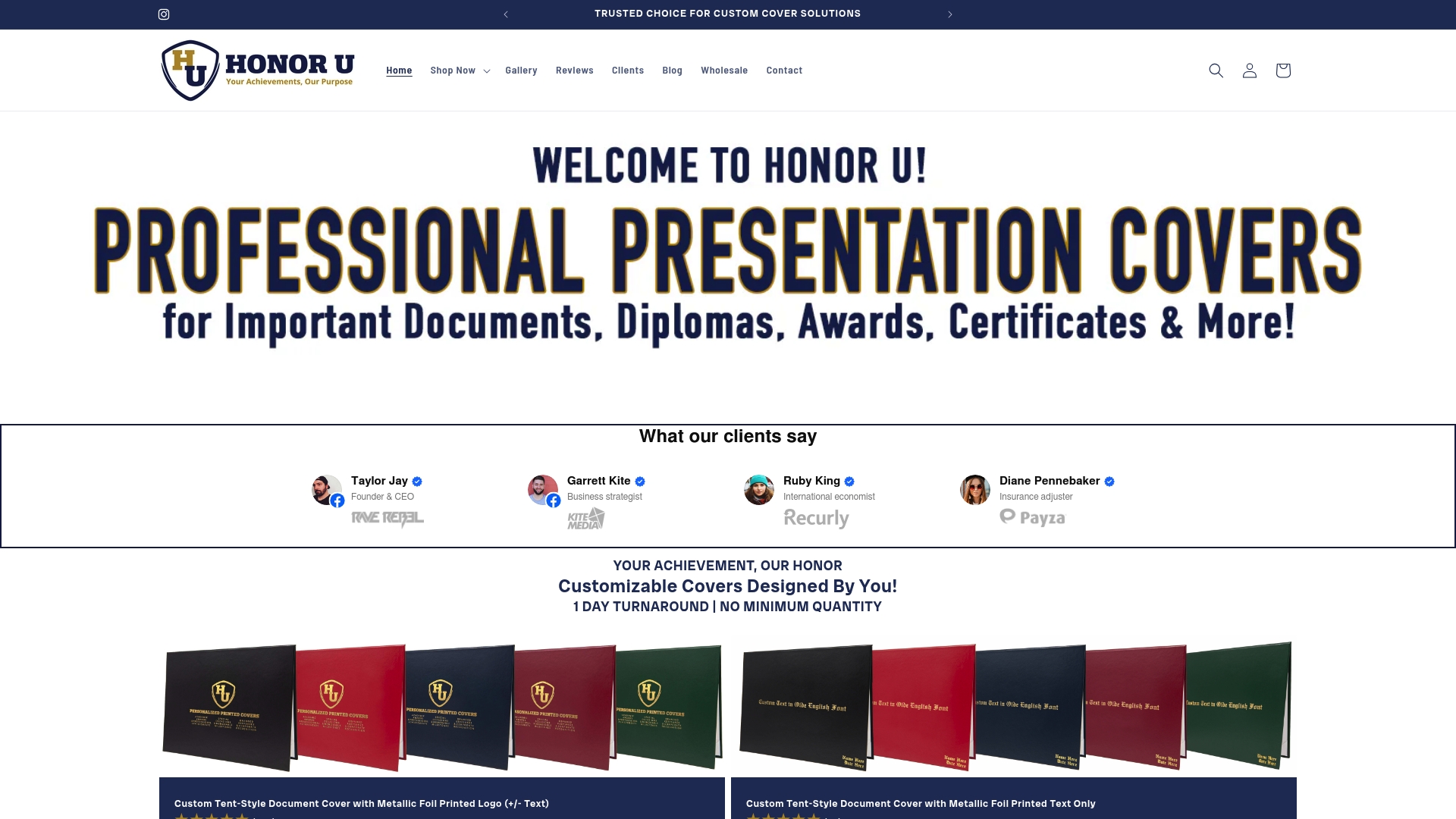
The classic tent-style diploma cover is available in multiple colors with metallic foil personalization, and custom dimensions are accommodated without setup fees. For organizations working with non-standard document sizes, Wehonoru’s made-to-fit capability removes the compromise between fit and presentation quality. Orders ship next day, free on orders over $30. Visit Wehonoru.com to configure your cover, upload your logo, and place your order with confidence.
FAQ
What is the definition of a custom size certificate cover?
A custom size certificate cover is a protective holder manufactured to match the exact dimensions of a specific certificate, providing a snug fit that preserves the document and presents it professionally. The term is used interchangeably with “custom certificate holder” or “made-to-fit document cover” in the presentation products industry.
What are the standard sizes for certificate covers in the U.S.?
The three most common sizes are 6"x8" for junior awards and completion certificates, 8.5"x11" for high school and undergraduate diplomas, and 11"x14" for advanced degrees and formal commendations. Documents outside these dimensions require a custom-sized cover.
What is the difference between a certificate cover and a certificate folder?
A certificate cover is a single-document holder designed for a precise, tailored fit around one certificate, while a certificate folder includes interior pockets and can hold multiple documents simultaneously. Covers prioritize protection and focused presentation; folders prioritize versatility.
How much larger should a certificate cover be than the certificate itself?
A cover should be one-quarter to one-half inch larger than the certificate’s measured dimensions in both width and height. This margin allows smooth insertion and removal without stressing the document’s edges.
What materials are most commonly used for custom certificate covers?
Smooth leatherette is the dominant material choice, selected by approximately 90% of buyers for its professional appearance and durability. Faux leather, textured stock, and padded presentation cases are available for organizations seeking a more distinctive or heirloom-quality finish.