
Blank vs Custom Covers: Choosing the Right Diploma Cover

TL;DR:
- Choosing between blank and custom covers depends on budget, event importance, and long-term document use. Blank covers are inexpensive and suitable for routine, short-term purposes, while custom covers offer durability and branding for milestone awards. Wehonoru provides quick turnaround for both options, with custom covers produced in one business day and no minimum order.
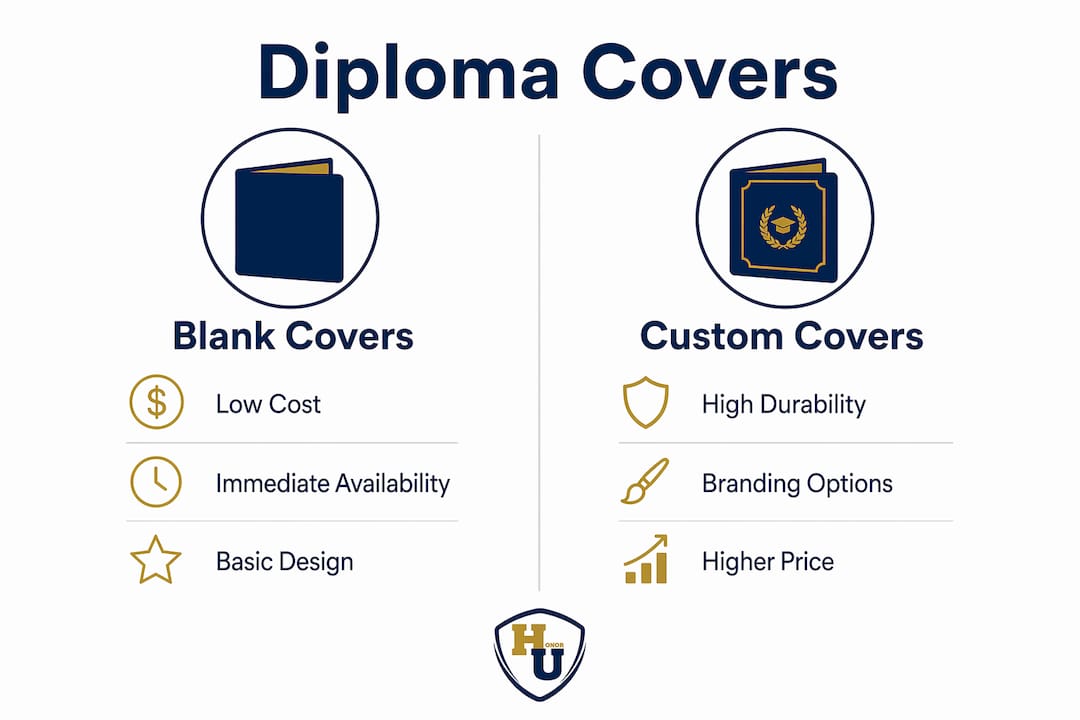
Choosing between blank and custom covers is the first real decision in diploma and certificate presentation, and it shapes everything from perceived prestige to long-term document preservation. A blank cover is a pre-made, minimally branded option available immediately at a lower price point. A custom cover is a fully tailored design built around specific dimensions, institutional branding, and material requirements. Blank covers generally cost between $5 and $250, while custom covers range from $100 to over $2,500 depending on design complexity and materials. That price gap reflects a genuine difference in purpose, not just aesthetics. Wehonoru serves both needs, offering pre-phrased blank designs and fully personalized foil-printed covers with no minimum order and next-day production.
What are blank covers and when are they best used?
Blank covers are pre-manufactured document holders with little to no institutional identity built in. They arrive ready to use, require no design lead time, and cost significantly less than custom alternatives. For organizations managing high-volume, routine certificate events, that combination of speed and low cost is genuinely useful.
When blank covers make sense
Blank covers suit short-term projects, promotional items, and tightly budgeted uses where branding is not the priority. A community college distributing completion certificates for a one-time workshop series does not need foil-stamped institutional covers. A nonprofit recognizing volunteer hours at an annual picnic benefits more from cost efficiency than from prestige materials. In these scenarios, blank covers deliver exactly what is needed.
The typical use cases for blank covers include:
- Routine training completions where certificates are issued frequently and replaced regularly
- Promotional or temporary documents that recipients are unlikely to archive long-term
- Budget-constrained events where per-unit cost must stay minimal
- Short-run or test orders where an organization is evaluating cover formats before committing to a custom design
- Indoor storage or temporary protection of documents not intended for display
The limitations of blank covers are real and worth understanding before committing. Blank covers are suitable for temporary protection and indoor storage, but they lack the tailored fit and material quality needed for long-term archival. Standard sizing often creates a mismatch with non-standard diploma dimensions, which is a common problem for institutions issuing documents outside the typical 8.5 x 11 inch format. Generic appearance is another consistent drawback. Without meaningful design adaptation, blank covers read as exactly what they are: off-the-shelf products.
Failure to significantly modify blank templates often results in generic or uninspiring outcomes. Design professionals recommend adapting at least 60% of template elements, including layout, color, and element positioning, to create a result that feels intentional rather than default.
Pro Tip: If you are using a blank cover for a meaningful event, add a custom insert card with the recipient’s name and achievement details. This small addition creates a personalized feel without requiring a full custom cover order.
Blank covers from Wehonoru start at accessible price points with no setup fees and no minimum order quantities. That makes them a practical starting point for schools, nonprofits, and HR teams that need professional presentation without a large upfront commitment.
What are custom covers and why choose them?
Custom covers are built to specification. The design, dimensions, material, and finish are all determined by the buyer, not by a manufacturer’s standard template. For diplomas, degree certificates, and milestone awards, that level of control produces a result that blank covers cannot replicate.
The case for full customization
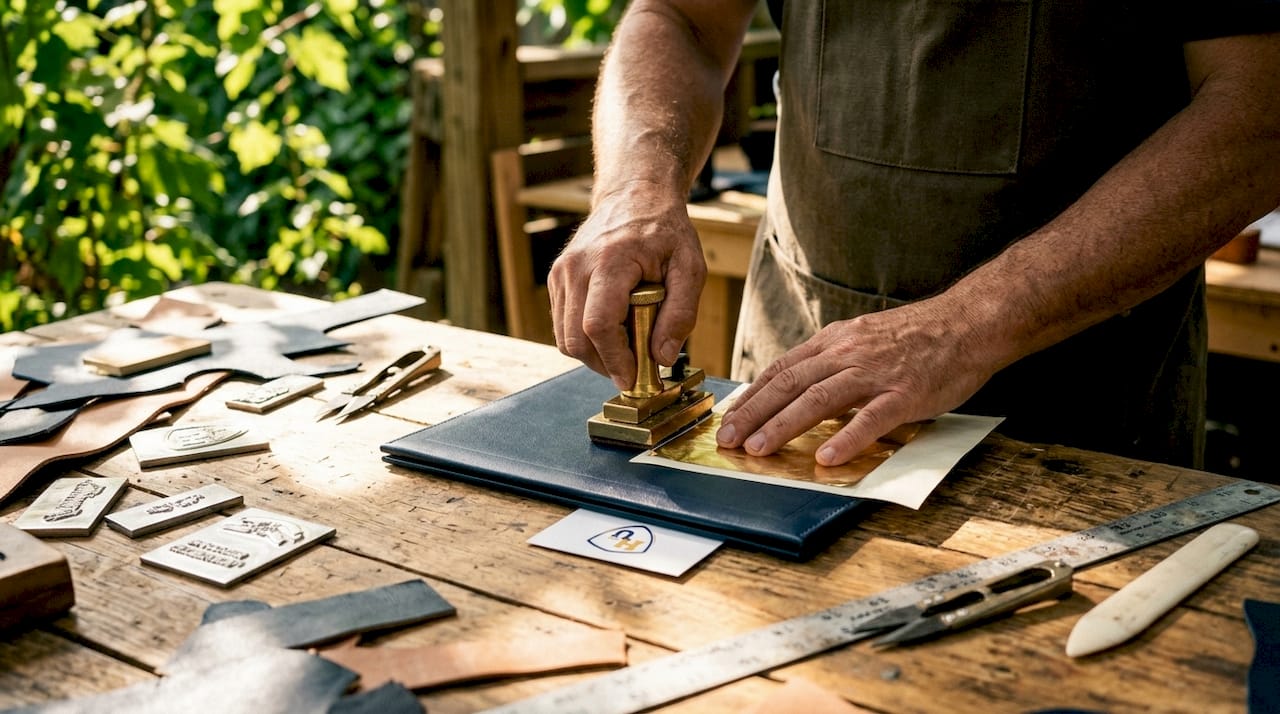
Custom covers give a polished, professional finish preferred for diplomas and commemorative documents. They accommodate specific dimensions not supported by standard templates, which matters for institutions issuing non-standard degree documents or oversized award certificates. Material selection also expands significantly with custom orders. Options like premium leatherette, textured board, and metallic foil printing produce covers that carry an heirloom quality, the kind of presentation that recipients keep for decades.
The advantages of custom covers for diploma and certificate presentation include:
- Institutional branding through foil-stamped logos, school names, and official seals
- Made-to-fit dimensions for non-standard document sizes
- Material durability suited to long-term archival and display
- Design exclusivity that reinforces the prestige of the credential
- Repairability over years of use, unlike mass-produced blank covers that require full replacement
Material choice deeply affects both aesthetics and functional longevity. Custom cover materials improve durability and daily use resilience compared to standard mass-produced options. This matters most when a diploma will be displayed in a professional setting, such as a physician’s office, a law firm reception area, or a university administrator’s wall. The cover becomes part of the credential’s visual authority.
Cost and lead time are the two factors that give buyers pause. Custom covers range from $100 to over $2,500 depending on design complexity, with turnaround times ranging from 3 to 14 days or longer for highly specialized orders. Wehonoru compresses that timeline significantly, producing custom foil-printed covers in one business day with no setup fees, which removes the most common objection to custom ordering.
Custom covers have a higher upfront cost but often outlast multiple replacements of blank covers, delivering better long-term value. Replacing low-quality pre-made covers every one to two years typically costs more over time than a single durable custom cover built to last a decade.
Pro Tip: When ordering custom diploma covers for an institution, include the graduation year in the foil print. This creates a permanent archival record and adds collector value for recipients who display their credentials.
For organizations that present diplomas or certificates as a reflection of their brand, the advantages of custom covers extend well beyond aesthetics. They signal that the issuing institution takes the credential seriously, which reinforces the recipient’s confidence in the achievement itself.
How do blank and custom covers compare on cost, time, and quality?
The decision between blank and custom covers comes down to three measurable factors: cost, turnaround time, and the degree of customization required. The table below maps these factors clearly.
| Factor | Blank covers | Custom covers |
|---|---|---|
| Cost range | $5–$250 per unit | $100–$2,500+ per unit |
| Turnaround time | Instant to 24 hours | 3–14 days (Wehonoru: 1 business day) |
| Customization level | Minimal; template-based | Full; dimensions, materials, branding |
| Durability | Moderate; suited to short-term use | High; archival and display-grade |
| Branding capacity | Generic or pre-phrased only | Institutional logos, foil text, custom seals |
| Best for | Routine events, budget orders | Milestone credentials, permanent archives |
The cost gap between blank and custom covers is real, but upfront price is often misleading. Professionals recommend evaluating long-term service life value rather than initial cost alone. A blank cover purchased at $15 and replaced twice over five years costs $45 total. A custom cover purchased at $40 and still in use after ten years costs less per year and carries far greater presentational value throughout its life.
Turnaround time is where the comparison gets more nuanced. Standard custom orders from most suppliers require 5–10 business days. Wehonoru’s one-business-day production model changes that calculation entirely, making custom covers a viable option even for last-minute graduation ceremonies or urgent award presentations.
Sizing mismatch is the most common pitfall with blank covers. Standard diploma sizes vary by institution, and a cover designed for an 8.5 x 11 inch document will not fit a 7 x 9 inch or 11 x 14 inch certificate without visible gaps or folding issues. Custom covers address this gap by fitting specific actual dimensions, which blank mass-produced options cannot reliably achieve.
How to decide which cover option fits your needs
The right cover choice depends on four factors: the significance of the event, the importance of institutional branding, the available budget, and the intended lifespan of the document. Working through these factors in order produces a clear answer for most buyers.
-
Assess the significance of the event. A doctoral degree ceremony, a board certification presentation, or a military commendation warrants a custom cover. A monthly employee recognition certificate or a workshop completion document does not require the same investment. Match the cover’s prestige level to the credential’s weight.
-
Evaluate branding requirements. If the issuing institution’s name, logo, or seal needs to appear on the cover, custom is the only path. Pre-phrased blank covers carry generic text like “Diploma of Graduation” but cannot incorporate institutional identity without full customization. Review the complete diploma cover guide for a detailed breakdown of branding options.
-
Set a realistic budget per unit. Blank covers make sense when the per-unit budget is under $20 and volume is high. Custom covers become cost-effective when the per-unit budget allows for $25 or more, especially with bulk pricing discounts applied. Wehonoru’s tiered pricing reduces the per-unit cost significantly at higher quantities, making custom covers accessible for large class sizes.
-
Consider the document’s intended lifespan. A diploma displayed in a professional office for twenty years needs archival-grade materials. A certificate filed in an HR folder for compliance purposes does not. Custom covers better suit long-term ownership needing repairability and sustained performance, while blank covers serve temporary or storage-only applications well.
-
Consider a hybrid approach for mixed needs. A hybrid strategy is effective for organizations that issue both milestone credentials and routine certificates throughout the year. Use blank covers for monthly training completions and quarterly recognition events. Reserve custom foil-printed covers for annual graduation ceremonies, board certifications, and executive awards. This approach maximizes budget efficiency while ensuring that the presentations that matter most carry the appropriate weight.
For schools and universities managing multiple ceremony types, the certificate cover buying guide from Wehonoru provides a detailed breakdown of styles and materials suited to each context. Corporate HR teams evaluating cover options for employee recognition programs will find the same framework applies directly to their needs.
Pro Tip: Order a sample of both blank and custom covers before committing to a large run. Seeing the physical difference in material weight, finish quality, and dimensional fit makes the decision straightforward.
The hybrid model also reduces inventory risk. Institutions that stock only blank covers in bulk often find themselves with surplus product when class sizes change or event formats shift. Ordering custom covers in smaller quantities, as Wehonoru allows with no minimum order requirement, eliminates that problem entirely.
Key Takeaways
Custom covers deliver superior branding, durability, and long-term value for milestone credentials, while blank covers serve routine, budget-conscious events where speed and low cost take priority.
| Point | Details |
|---|---|
| Cost comparison | Blank covers cost $5–$250; custom covers range from $100 to over $2,500, but deliver better long-term value. |
| Best use for blank covers | Routine training completions, temporary documents, and budget-constrained events with no branding requirements. |
| Best use for custom covers | Milestone diplomas, institutional credentials, and any document intended for long-term display or archival. |
| Hybrid approach | Organizations benefit from using blank covers for routine events and custom covers for key ceremonies. |
| Wehonoru advantage | One-business-day production with no minimums makes custom covers accessible for urgent and small-quantity orders. |
Why the upfront cost argument usually gets it wrong
The most common mistake I see buyers make is treating cover selection as a pure cost-per-unit decision. They look at a blank cover at $12 and a custom cover at $35 and conclude the math is obvious. It is not.
A diploma cover is not a consumable. It is the first physical object a graduate touches when they receive their credential, and it is often the object they keep longest. I have seen institutions spend carefully on ceremony venues, printed programs, and regalia, then hand graduates a generic cover that undermines the entire presentation in the final moment. That disconnect is avoidable and unnecessary.
The durability argument is equally underappreciated. Replacing cheap pre-made covers every one to two years usually costs more over time than one durable custom cover lasting a decade. For institutions that issue the same credential format year after year, a well-designed custom cover template pays for itself within two or three ordering cycles.
Material selection is where I see the most overlooked opportunity. Most buyers focus on color and text. The structural choices, board weight, cover texture, hinge construction, and interior lining, determine how the cover performs over years of handling. A cover that feels substantial when first opened communicates quality before the recipient reads a single word of the credential inside.
My practical advice: reserve your custom cover budget for the credentials that recipients will display or keep. Use blank covers freely for everything else. That discipline produces better outcomes than either extreme of always buying custom or always buying blank.
Wehonoru’s diploma and certificate cover options
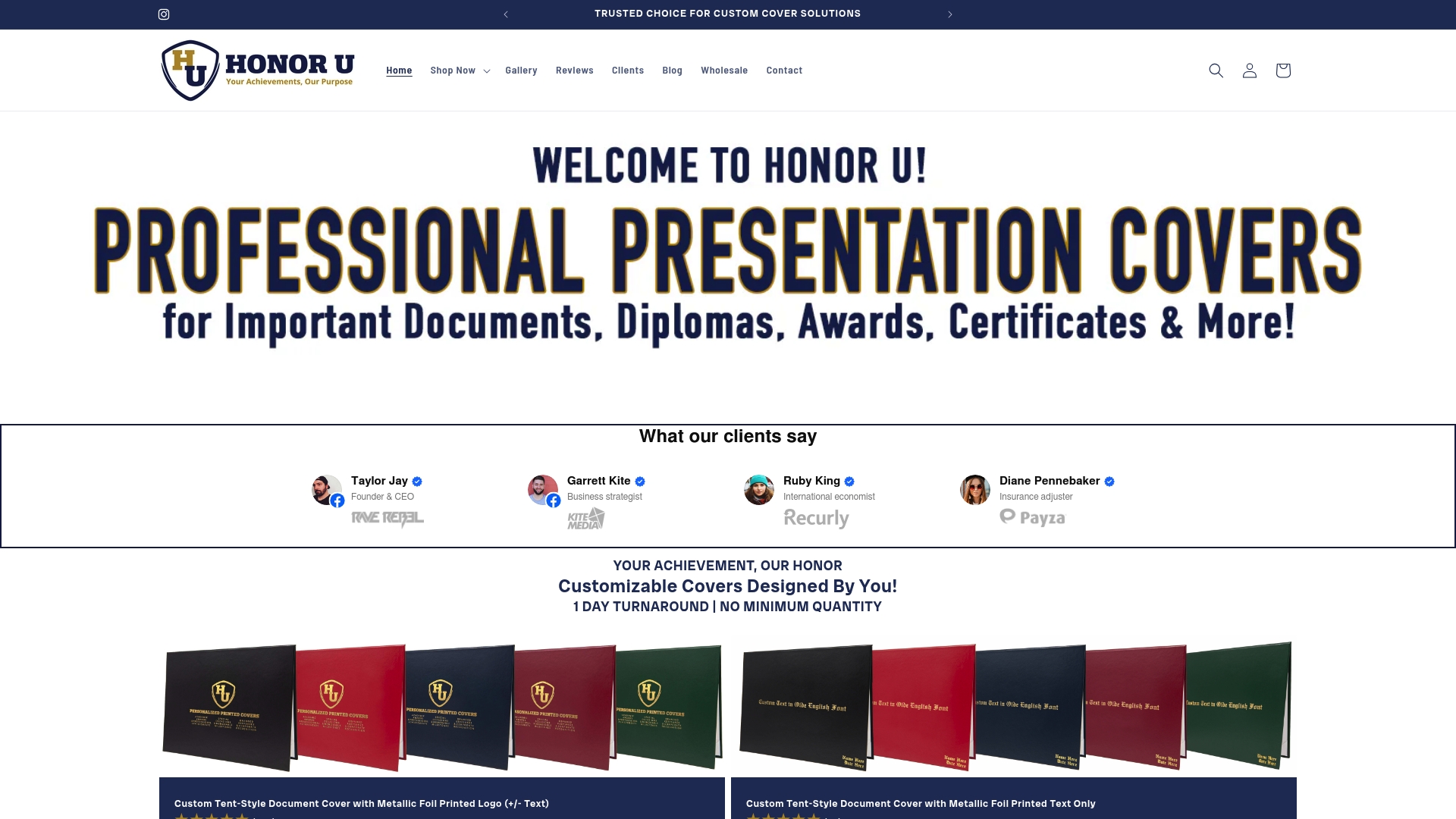
Wehonoru offers both blank and custom diploma covers built for exactly the decision this article describes. The Classic Diploma of Graduation cover delivers a clean, professional tent-style presentation at an accessible price point, with no minimum order and free shipping on orders over $35. For milestone ceremonies, the Class of graduation cover adds personalized year and class details through metallic foil printing, produced in one business day. Both options are available in multiple colors, with made-to-fit custom sizing for non-standard document dimensions. Contact Wehonoru at 804-223-4339 or contact@wehonoru.com to discuss your specific presentation needs.
FAQ
What is the main difference between blank and custom diploma covers?
Blank covers are pre-made with minimal branding and are available immediately at lower cost. Custom covers are built to specification with institutional logos, foil printing, and tailored dimensions, making them the preferred choice for milestone credentials.
How much do custom diploma covers cost compared to blank covers?
Blank covers generally cost between $5 and $250, while custom covers range from $100 to over $2,500 depending on materials and design complexity. Wehonoru’s custom covers start significantly lower due to no setup fees and direct-to-consumer pricing.
When should an organization use blank covers instead of custom covers?
Blank covers are the right choice for routine training completions, temporary documents, and high-volume events where per-unit cost must stay low and institutional branding is not required.
Can blank covers be customized to look more professional?
Partially. Adapting at least 60% of template elements, including layout, color, and positioning, improves the result, but blank covers cannot incorporate institutional logos or foil printing without becoming a custom order.
How quickly can custom diploma covers be produced?
Most suppliers require 5–10 business days for custom orders. Wehonoru produces custom foil-printed diploma covers in one business day with no minimum order quantity, making them viable for last-minute ceremonies and urgent award presentations.
Recommended
More on printing
Foil, logos, and what you can put on a cover are answered on the FAQ.
Taylor Pace writes Honor U guides. Blair Black reviews them. Honor U sells empty covers and holders.